
When tooth pain becomes intense, even simple activities like eating, sleeping, or talking can feel difficult. If you are searching for home remedies for tooth decay pain, the first thing to understand is that home care can sometimes reduce discomfort temporarily, but it cannot repair a cavity, treat an infected tooth, or remove the underlying cause. Toothache may develop because of tooth decay, a cracked or damaged tooth, gum disease, a dental abscess, a loose filling, or tooth sensitivity. Knowing what you can safely do at home can help you stay more comfortable while arranging proper dental care.
Unbearable Tooth Pain What to Do at Home: Immediate Steps
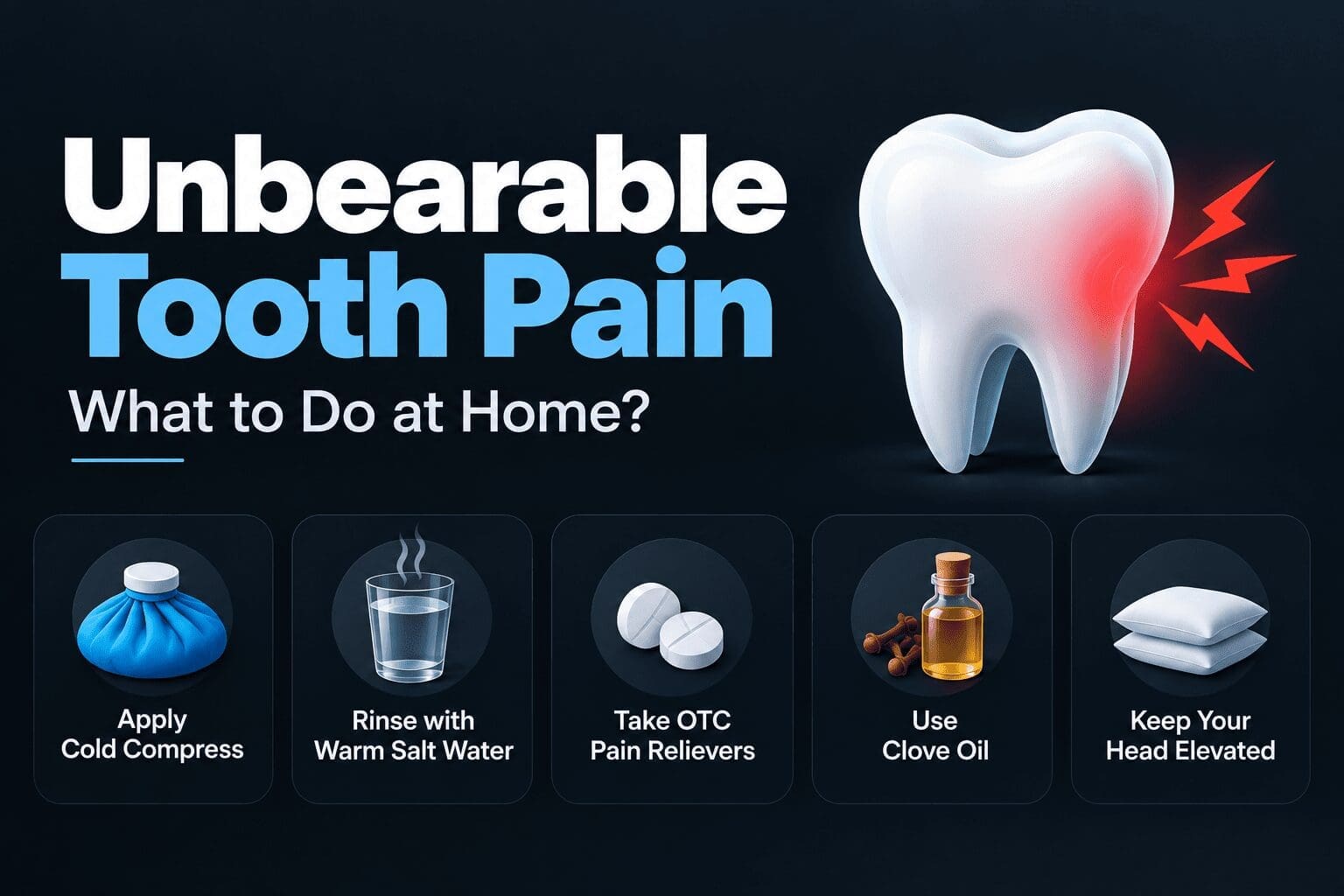
If you are wondering unbearable tooth pain what to do at home, start with simple measures that reduce irritation around the painful tooth. Rinse your mouth gently with warm salt water, particularly if food or debris may be trapped around the area. Avoid very hot, cold, sweet, or acidic foods and drinks because they can trigger sharper pain. Choose softer foods and chew on the opposite side of your mouth.
A cold compress placed against the outside of the cheek for short periods may also help reduce discomfort, particularly when there is minor swelling. Keep your head slightly elevated when resting, as lying completely flat may make throbbing discomfort feel more noticeable for some people.
These measures are intended to provide temporary comfort while you arrange dental care. They should not be viewed as a way to permanently treat the tooth.
Why Can Tooth Pain Become So Severe?
Tooth pain can have several causes, and the intensity of the pain does not always tell you exactly what is happening inside the tooth.
A cavity may initially cause little or no discomfort. As decay progresses deeper into the tooth, it can begin affecting the sensitive inner structures, resulting in sharp or persistent pain. Pain triggered by hot, cold, or sweet foods can also occur with decay or exposed dentin.
A cracked tooth may hurt when you bite or release your bite. Gum problems can cause tenderness, swelling, bleeding, or discomfort around one or more teeth. Another important cause is a dental abscess, where an infection creates a collection of pus around a tooth or gum. An abscess requires professional dental treatment and will not simply disappear on its own.
Because different dental problems can produce similar symptoms, persistent or severe pain should be evaluated rather than treated only with home remedies.
Pain Relief Options While You Wait for a Dentist
For adults and adolescents, over-the-counter pain medicines can provide temporary relief when used appropriately. Current dental pain guidance identifies non-opioid pain relievers, including anti-inflammatory medicines such as ibuprofen and medicines such as acetaminophen, as options for managing acute dental pain when immediate dental treatment is unavailable.
However, there is no single best medicine for severe tooth pain for everyone. The appropriate choice depends on your age, medical history, allergies, other medicines you take, pregnancy status, and conditions such as stomach ulcers, kidney disease, liver disease, or certain cardiovascular problems.
Always follow the instructions on the medicine label and avoid taking more than the recommended amount. If you are unsure whether a pain reliever is suitable for you, ask a pharmacist or healthcare professional.
Do not place aspirin or other tablets directly against the tooth or gum. Doing this can irritate or damage the soft tissues of the mouth rather than treating the source of the pain.
Can Salt Water Help a Toothache?
A warm salt-water rinse is a simple option that may help keep the mouth cleaner and soothe irritated tissues temporarily.
To make the rinse, dissolve about half a teaspoon of salt in a glass of warm water. Swish it gently around your mouth and spit it out rather than swallowing it.
Salt water does not remove tooth decay or cure an infection inside a tooth. Its role is mainly supportive while you are waiting for professional care.
Children should not use salt-water rinses unless an adult is confident they can rinse and spit without swallowing the solution.
What Other Home Measures Can Make Tooth Pain More Manageable?
When pain is severe, small changes can make the next several hours more comfortable.
Try eating soft foods such as yogurt, scrambled eggs, soup that has cooled to a comfortable temperature, or other foods that require minimal chewing. Avoid chewing directly on the painful side.
If cold air makes the tooth hurt, avoid exposing it unnecessarily. Similarly, very hot drinks, ice-cold beverages, sweets, and highly acidic foods may trigger sensitivity.
Continue brushing your teeth gently with a soft toothbrush. Keeping the mouth clean is important, but aggressive brushing around an extremely painful area may increase irritation. If food is visibly stuck between teeth, carefully cleaning between them may help, although you should avoid forcing floss into swollen or severely painful tissue.
It is also important to avoid smoking while experiencing dental pain because smoking can worsen some oral problems and interfere with healing.
Home Remedies Should Not Delay Dental Treatment
It can be tempting to continue using temporary measures once the pain becomes manageable. However, pain relief does not necessarily mean that the dental problem has been resolved.
For example, a cavity that reaches the deeper parts of a tooth may require a filling or more extensive treatment. A severely damaged or infected tooth may require treatment such as root canal therapy or extraction, depending on the condition of the tooth.
Likewise, an abscess requires dental attention. Taking pain medication may make you feel better temporarily, but it does not remove the infection itself.
Antibiotics are also not automatically required for every toothache. Dental treatment is generally the priority for many causes of tooth-related pain, while antibiotics may be appropriate when there are signs that an infection is spreading or causing systemic illness. They should only be used when prescribed or recommended by an appropriate healthcare professional.
When Should You See a Dentist for Tooth Pain?
You should arrange a dental appointment if the pain continues, repeatedly returns, becomes worse, or interferes with normal activities such as eating or sleeping.
You should seek urgent dental care if severe pain is not controlled with appropriate pain-relief measures, particularly when it is accompanied by swelling, fever, a bad taste in the mouth, pain when biting, or difficulty opening the mouth.
A dentist can examine the tooth and determine whether the problem is caused by decay, infection, a fracture, gum disease, an old filling, or another condition. Depending on the diagnosis, treatment may involve a filling, cleaning, root canal treatment, drainage of an abscess, extraction, or another appropriate procedure.
Getting the cause treated is the most reliable way to prevent the pain from repeatedly returning.
Signs That Tooth Pain May Be an Emergency
Some symptoms require more than an ordinary dental appointment.
Seek emergency medical attention if you develop significant swelling around the mouth, throat, neck, or eye, particularly if the swelling is affecting your ability to breathe, swallow, speak, or open your mouth normally.
A high fever combined with significant dental swelling or feeling seriously unwell can also indicate that an infection needs urgent assessment.
Do not wait for home remedies to work when symptoms suggest that an infection may be spreading. Serious dental infections can sometimes affect areas beyond the tooth and require prompt medical or dental treatment.
How to Prevent Another Severe Toothache
Once the immediate problem has been treated, prevention becomes important. Brush twice a day with fluoride toothpaste and clean between your teeth regularly using floss or an interdental brush.
Reducing frequent sugary snacks and drinks can also help lower the risk of tooth decay. Regular dental examinations allow problems to be detected before they develop into painful conditions.
If you regularly experience sensitivity, bleeding gums, bad breath, or occasional tooth pain, mention these symptoms during your dental appointment. A small problem is generally easier to manage before it develops into a larger one.
Final Thoughts
If you are experiencing unbearable tooth pain what to do at home, focus first on safe temporary measures such as a warm salt-water rinse, appropriate over-the-counter pain relief, soft foods, and avoiding triggers such as extreme temperatures and sweets. However, severe or persistent tooth pain is a warning that something needs professional attention. Home care can make the waiting period easier, but a dentist needs to identify and treat the underlying cause so you can get lasting relief.