
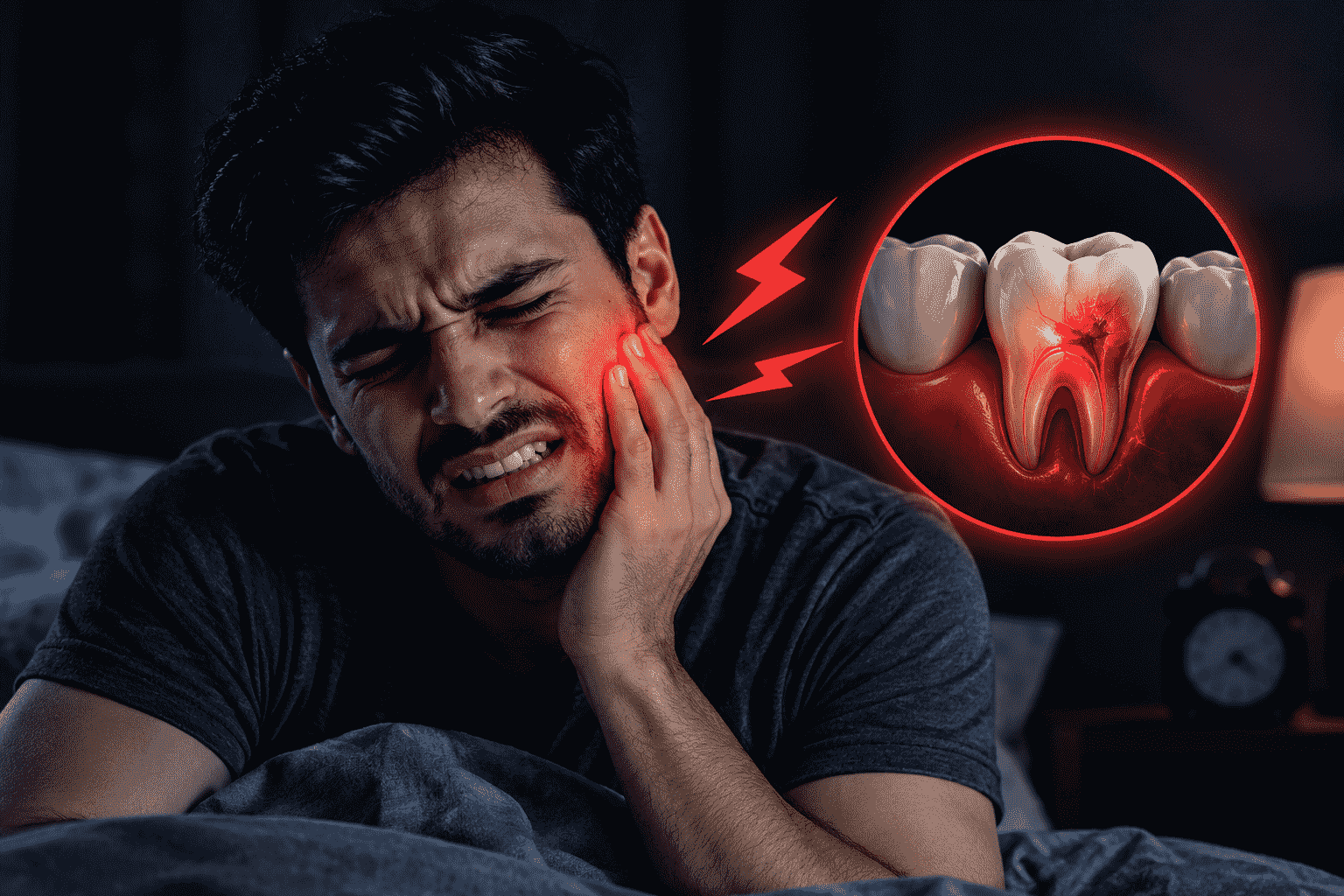
When extreme tooth pain can’t sleep, it can feel impossible to focus on anything else. A severe toothache that becomes worse at night, throbs continuously, or keeps waking you up may be more than ordinary sensitivity. While some tooth pain can temporarily settle with home care, intense or persistent pain can indicate a problem that needs professional dental treatment.
Knowing when tooth pain requires urgent attention can help you avoid unnecessary suffering and prevent a dental problem from becoming more serious. Severe dental pain that affects sleep or daily activities and does not improve with appropriate pain relief is considered a reason to seek urgent dental care.
Why Does Tooth Pain Become So Severe at Night?
Many people notice that tooth pain feels worse when they lie down. This can happen because changes in blood flow and pressure around inflamed tissues may make throbbing pain more noticeable. At night, there are also fewer distractions, so even moderate pain can feel much more intense.
The underlying cause is more important than the time of day, however. Tooth decay, inflammation of the dental pulp, a cracked tooth, gum infection, dental abscess, a damaged filling, or problems involving a wisdom tooth can all produce significant pain.
If the pain repeatedly returns at night, lasts for hours, or becomes increasingly difficult to control, it is better not to assume that it will disappear on its own.
Extreme Tooth Pain Can’t Sleep: When Is It an Emergency?
If extreme tooth pain can’t sleep describes what you are experiencing, pay attention to the symptoms accompanying the pain.
Severe pain by itself can require urgent dental attention, particularly when ordinary pain-relief measures are not helping. However, certain symptoms suggest that the situation may require immediate medical attention rather than waiting for a routine dental appointment.
Seek urgent dental care if you experience:
Severe or persistent tooth pain that interferes with sleep or normal activities
Significant swelling around the tooth, gums, cheek, or jaw
Fever or feeling generally unwell along with dental pain
A bad taste or drainage in the mouth
Difficulty opening your mouth
Pain following a recent tooth extraction
A broken, loose, or severely damaged tooth causing significant pain
A dental abscess is particularly important to address because it is an infection that requires dental treatment and does not normally disappear without appropriate care.
Signs You Should Seek Immediate Medical Help
Some dental infections can spread into surrounding tissues. This is why swelling should never be ignored when it is rapidly increasing or associated with other serious symptoms.
Go to an emergency department or seek immediate emergency medical help if dental swelling makes it difficult to breathe, swallow, or speak. Swelling involving the neck or area around the eye can also require emergency assessment.
Severe facial injuries, uncontrolled bleeding, or significant swelling that could affect the airway are also emergencies.
These symptoms are not situations where you should simply wait for a regular dental appointment.
What Can Cause Extreme Tooth Pain?
Severe tooth pain can have several causes, and the sensation alone cannot reliably identify the problem.
Deep Tooth Decay
When decay progresses deeper into a tooth, it can irritate or damage the pulp, which contains nerves and blood vessels. You may experience lingering sensitivity to hot or cold, spontaneous pain, or intense throbbing.
Dental Abscess
An abscess occurs when an infection leads to a collection of pus around a tooth or in the gum. Pain may be accompanied by swelling, tenderness, fever, a bad taste, or difficulty chewing.
Cracked or Damaged Tooth
A cracked tooth can cause sharp pain when biting or releasing your bite. Depending on the location and depth of the crack, the tooth may also become sensitive to temperature.
Gum or Wisdom Tooth Problems
Inflamed gums, periodontal infections, or inflammation around a partially erupted wisdom tooth can cause considerable discomfort. In some cases, swelling and difficulty opening the mouth can develop.
Failed or Damaged Dental Work
A loose filling, damaged crown, or other restoration can expose sensitive tooth structures or allow bacteria to reach areas that were previously protected.
What Can You Do Until You See a Dentist?
If you are waiting for an appointment, the goal should be to control discomfort safely without delaying treatment.
For temporary relief, follow the directions on any over-the-counter pain medication you normally take safely. A pharmacist can also help you determine which pain-relief option is appropriate for you, especially if you take other medicines or have existing health conditions.
Keeping your head slightly elevated while resting may make nighttime throbbing feel more manageable. You can also gently rinse your mouth with warm salt water and keep the area clean. Avoid very hot, very cold, sugary, or hard foods that trigger the pain, and try to chew on the opposite side.
If you are searching for the best remedy for toothache, remember that home measures are generally temporary. They may make you more comfortable while you arrange professional care, but they do not repair decay, remove an infection, or treat a damaged tooth.
Why Pain Relief Does Not Always Mean the Problem Is Gone
One of the biggest mistakes people make with tooth pain is assuming that feeling better means the underlying problem has disappeared.
Dental pain can sometimes reduce temporarily even though decay, infection, or structural damage remains. Painkillers can reduce symptoms without addressing the original cause. Similarly, an abscess may drain and temporarily reduce pressure while the infection remains present.
The American Dental Association notes that antibiotics are not appropriate for most dental pain and certain localized dental conditions; dental treatment is often the priority. Antibiotics may be indicated when there are signs of systemic involvement, such as fever or malaise, based on professional assessment.
For this reason, avoid taking leftover antibiotics or someone else’s prescription without professional advice.
What Will an Emergency Dentist Do?
Your dentist will first assess where the pain is coming from and look for signs of decay, infection, cracks, gum problems, or other dental conditions. Depending on your symptoms, they may need dental X-rays or additional testing.
Treatment depends entirely on the cause. A dentist may recommend a filling for certain types of decay, treatment of the dental pulp or root canal treatment for an extensively affected tooth, drainage when appropriate for an abscess, or extraction when a tooth cannot reasonably be saved.
The immediate goal of urgent dental care is usually to control severe pain, address infection or injury, and prevent the condition from worsening. Further restorative treatment may be required after the emergency has been managed.
How to Prevent Severe Tooth Pain in the Future
Although not every dental emergency can be prevented, consistent oral care can reduce the likelihood of problems becoming severe.
Brush twice daily with fluoride toothpaste and clean between your teeth regularly. Limiting frequent sugary foods and drinks can also help reduce the risk of tooth decay. Regular dental examinations allow problems to be identified before they develop into painful emergencies.
It is also worth addressing small problems early. A minor sensitivity, chipped filling, or occasional discomfort may seem easy to ignore, but dental problems can progress without producing severe symptoms at first.
Don’t Ignore Tooth Pain That Keeps You Awake
If you are experiencing extreme tooth pain can’t sleep, don’t simply wait for the pain to disappear, particularly if it is persistent, worsening, or accompanied by swelling, fever, drainage, or difficulty eating. Severe dental pain that affects your sleep or daily activities and cannot be controlled with appropriate pain relief warrants urgent professional assessment.
For temporary comfort while arranging care, focus on gentle oral hygiene, suitable pain relief, soft foods, and avoiding triggers. If you need instant pain relief for toothache, remember that temporary symptom control is not the same as treating the underlying dental problem. A dentist can identify the cause and recommend the treatment needed to protect your tooth, your oral health, and your overall well-being.