
Have you ever noticed a sharp twinge when drinking something cold, a dark spot on your tooth, or a little discomfort when chewing? You may wonder whether it is simply sensitivity or something more serious. Understanding cavity symptoms can help you recognize a potential problem before it becomes painful. Along with routine dental care, knowing what to watch for can make it easier to seek dental advice at the right time.
The tricky thing about cavities is that they do not always hurt in the beginning. A cavity can develop quietly while the tooth still feels completely normal. That is why paying attention to small changes in your teeth and keeping up with preventative dental care are both important. So, how can you tell if you actually have a cavity? Let’s walk through the signs in a simple, practical way.
What Exactly Is a Cavity?
A cavity is a hole or damaged area that develops in a tooth because of tooth decay. Your mouth naturally contains bacteria. When you eat foods containing carbohydrates and sugars, these bacteria can produce acids. Over time, repeated acid attacks can weaken the hard outer layer of your tooth, known as enamel.
If this process continues, the damage can move deeper into the tooth. Eventually, it may reach the dentin and, in more advanced cases, the soft inner part of the tooth where the nerves and blood vessels are located.
A cavity is therefore more than just a small hole you can see in a mirror. It is a gradual process, and catching it early can often make treatment simpler.
As a cavity becomes deeper, it can eventually cause sensitivity, discomfort, or persistent tooth pain. Some people may notice that the discomfort becomes more noticeable when they lie down or try to sleep, leading to a toothache at night. This can make it difficult to get comfortable and may indicate that the decay has progressed closer to the inner part of the tooth. If tooth pain is becoming frequent or interfering with your sleep, it is important to have the tooth examined by a dentist rather than relying only on temporary pain relief.
What Are the Most Common Cavity Symptoms?
Not everyone experiences the same warning signs. Some people have noticeable discomfort, while others discover a cavity during a dental examination without having felt anything unusual.
Here are some of the most common signs to pay attention to:
1. Tooth Sensitivity
Does a particular tooth hurt when you drink something cold, eat ice cream, or have a hot cup of tea or coffee? Sensitivity can have several causes, including worn enamel, exposed tooth roots, gum problems, or a cavity.
If the sensitivity repeatedly affects the same tooth, especially if it is becoming more noticeable, it is worth having it checked.
2. Toothache or Persistent Pain
A tooth that starts aching without an obvious reason deserves attention. You may feel a dull ache, sharp pain, or discomfort that comes and goes.
Sometimes the pain is particularly noticeable while eating. If a tooth hurts when you bite down or apply pressure, decay may have progressed far enough to affect the deeper structures of the tooth.
3. Pain When Eating or Drinking
Some cavities cause discomfort when food or drinks come into contact with the affected tooth. Sweet foods can sometimes trigger a sudden sensation, while hot or cold items may cause a brief or lingering ache.
The important thing is not to ignore recurring discomfort simply because it disappears afterward. Temporary pain can still be a sign that something needs attention.
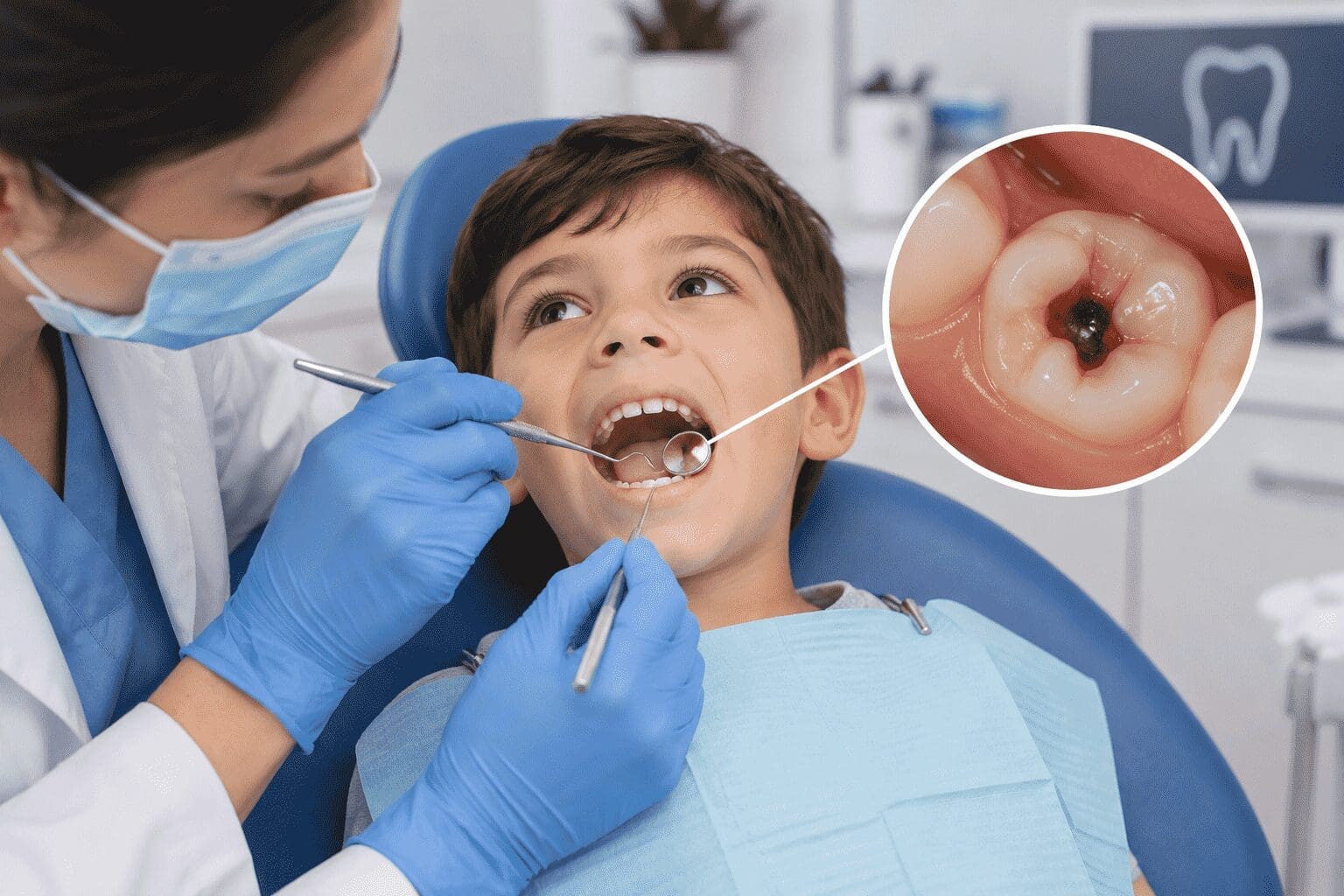
4. Visible Holes or Pits
You may eventually be able to see a small hole, pit, or indentation in a tooth. Cavities can occur in the grooves of back teeth, between teeth, near the gumline, or on other surfaces that are difficult to inspect yourself.
However, being unable to see a hole does not mean there is no cavity. Early decay may be too small or hidden between teeth to notice in a mirror.
5. White, Brown, or Dark Spots
Changes in the color of a tooth can sometimes indicate decay. Early enamel damage may appear as a white or chalky area. As the damage progresses, the area may become brown or darker.
Not every dark spot is a cavity, though. Staining, old dental work, and other conditions can also change the appearance of a tooth. A dentist can determine what is actually happening.
6. Food Getting Stuck in One Particular Area
If food constantly becomes trapped between the same two teeth or around one tooth, there may be a change in the tooth structure. Decay can create spaces where food collects more easily.
Repeated food trapping can also irritate the surrounding gums, so it is another reason to have the area examined rather than simply working around it.
Can You Have a Cavity Without Pain?
Yes. This is one of the most important things to understand.
A cavity can develop without causing noticeable pain, particularly during its early stages. The outer enamel does not contain nerves, so damage can progress before you experience the classic toothache many people associate with decay.
This is why waiting for pain before visiting a dentist is not a reliable strategy. By the time a cavity becomes painful, the decay may already have progressed deeper into the tooth.
Regular examinations allow a dentist to identify problems that you may not be able to see or feel yourself.
What Causes Cavities?
Cavities usually develop because several factors work together over time. Frequent consumption of sugary or starchy foods and drinks can contribute to acid production by oral bacteria. Poor plaque removal can allow bacteria and food debris to remain around teeth for longer periods.
Dry mouth can also increase the risk because saliva helps protect teeth and neutralize acids. Other factors may include deep grooves in the teeth, certain medications, frequent snacking, and difficulty cleaning particular areas.
It is not simply about whether you eat sweets. How frequently your teeth are exposed to acid-producing foods and how effectively plaque is removed also matter.
What Happens If You Ignore a Cavity?
A small cavity generally does not repair itself once a permanent hole has formed in the tooth. Without treatment, decay can continue spreading.
As the damage gets deeper, you may experience stronger sensitivity, pain, difficulty chewing, or swelling. If decay reaches the nerve inside the tooth, more extensive treatment may be necessary.
Early tooth decay treatment can often involve removing the damaged portion and restoring the tooth with a filling. More advanced decay may require procedures such as root canal treatment, depending on how severely the tooth has been affected.
The sooner a problem is identified, the more options you may have for preserving the natural tooth.
How Does a Dentist Check for a Cavity?
A dental examination usually involves more than simply looking at your teeth. The dentist will examine the tooth surfaces and may gently check areas where decay is suspected.
Depending on what they find, dental X-rays may be recommended. X-rays can help identify decay between teeth or beneath surfaces that cannot be fully evaluated by looking alone.
Your dentist may also ask about sensitivity, pain, eating habits, oral hygiene, and when you first noticed a change. These details can help them understand whether your symptoms are likely related to decay or another dental issue.
How Much Does Cavity Treatment Cost?
The cost of treatment depends on the condition of the tooth and the procedure required. A small filling is generally different in complexity and expense from treatment for a deeply damaged tooth.
If you are researching tooth decay treatment cost, remember that prices can vary based on the dental clinic, location, type of restoration, materials used, and whether additional treatment is necessary.
Rather than choosing treatment based only on price, it is important to understand what is causing the problem and what treatment will protect the tooth over the long term. Your dentist can explain the available options and associated costs before treatment begins.
What Can You Do to Reduce Your Risk?
You cannot always prevent every cavity, but you can significantly reduce your risk by taking care of your teeth consistently.
Brush twice a day with fluoride toothpaste and clean between your teeth regularly. Try to limit frequent sugary snacks and drinks, particularly when they are consumed repeatedly throughout the day. Drinking water can also help wash away food particles and support normal saliva function.
Most importantly, do not wait until something hurts before paying attention to your oral health. A small concern is usually easier to address than a problem that has been developing for months.
When Should You See a Dentist?
If you have recurring sensitivity, tooth pain, a visible spot or hole, swelling, or discomfort while eating, schedule an examination. You should also maintain regular dental visits even when your teeth feel perfectly fine.
If you are searching for a dental check up near me, consider choosing a qualified dental professional who can examine your teeth and explain any findings clearly.
Remember, not every toothache means you have a cavity, and not every cavity causes a toothache. Symptoms can overlap with other dental conditions, so an examination is the best way to understand what is really happening.
The Bottom Line: Listen to What Your Teeth Are Telling You
Your teeth do not always give you a dramatic warning when something is wrong. Sometimes the first clue is a little sensitivity, a change in color, food getting trapped, or mild discomfort that you might be tempted to ignore. Paying attention to these changes can help you get professional advice before the problem becomes more complicated.
Most cavity symptoms are worth discussing with a dentist when they persist or keep returning. And even if you have no symptoms at all, regular dental examinations remain an important part of protecting your teeth. If you notice something different, don’t panic—just get it checked. A timely dental visit can give you clarity, peace of mind, and, when necessary, the opportunity to protect your natural tooth.