
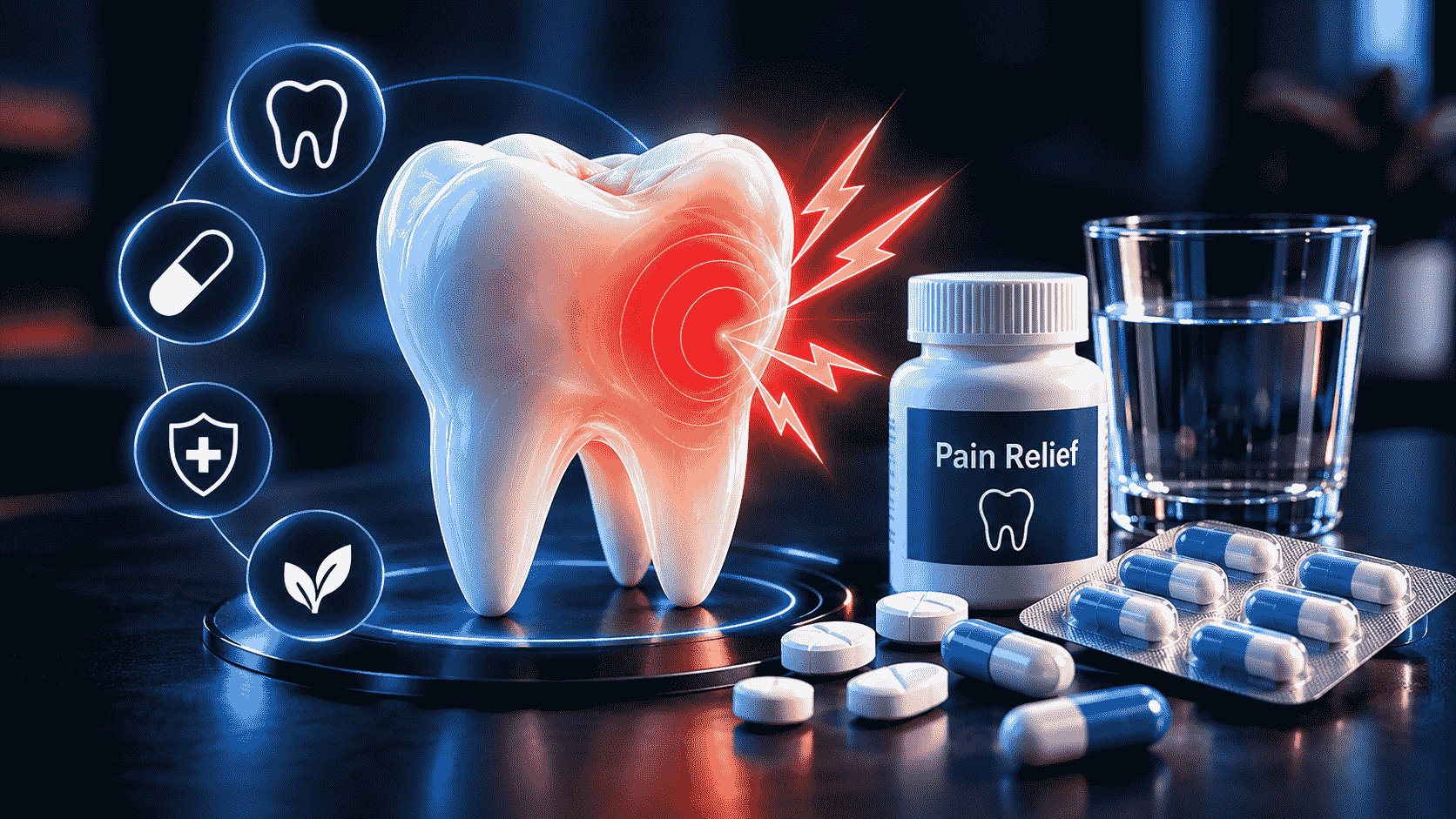
Tooth pain can be surprisingly intense. A mild ache may become a sharp, throbbing sensation that makes eating, concentrating, or sleeping difficult. If you are looking for a pain killer for tooth pain, the safest choice depends on the cause of your pain, your health, other medicines you take, and whether you have any conditions that make certain medicines unsuitable. Pain relief can help you manage symptoms temporarily, but it does not remove the dental problem causing the pain.
When a tooth suddenly starts hurting, it is natural to reach for whatever medicine is available at home. However, not every painkiller is appropriate for everyone. Understanding the difference between common over-the-counter options, knowing when to avoid them, and recognising when dental treatment is necessary can help you manage tooth pain more safely.
What Causes Tooth Pain?
Toothache is a symptom rather than a diagnosis. Several dental problems can cause pain, including:
- Tooth decay or a deep cavity
- Cracked or damaged teeth
- Gum inflammation or infection
- Tooth abscess
- Exposed tooth roots
- Dental trauma
- Problems following dental treatment
- Wisdom tooth problems
- Tooth sensitivity
- Inflammation of the nerve inside the tooth
The type of pain can sometimes provide clues. A brief sharp pain when eating something cold may be related to sensitivity, while persistent throbbing pain can occur when the inner tissues of a tooth become inflamed.
If pain continues, becomes stronger, or returns after temporary relief, it is important to have the tooth examined rather than repeatedly relying on medication.
How to Choose a Safe Pain Killer for Tooth Pain
For many adults and adolescents, non-opioid medicines are generally considered the first-line approach for temporarily managing acute dental pain. Current guidance supports nonsteroidal anti-inflammatory drugs (NSAIDs), such as ibuprofen or naproxen, alone or in combination with acetaminophen, when appropriate for the individual.
NSAIDs can be particularly useful when inflammation is contributing to the pain because they reduce inflammatory activity as well as pain. Acetaminophen works differently and may also be used for pain relief. The appropriate option depends on your individual circumstances, so always follow the medicine’s label and seek advice from a pharmacist or healthcare professional if you are unsure.
Ibuprofen and Other NSAIDs
Ibuprofen is an NSAID commonly used for toothache. It can help reduce both pain and inflammation. However, it is not suitable for everyone.
You may need to avoid or seek professional advice before using an NSAID if you have certain stomach, kidney, heart, bleeding, or medication-related concerns. NSAIDs can cause gastrointestinal problems and, in some people, other serious side effects.
Never assume that a stronger dose will provide better or faster relief. Taking more than recommended can increase the risk of side effects without necessarily solving the underlying dental problem.
Acetaminophen
Acetaminophen, also known as paracetamol in many countries, is another commonly used option for pain. It does not work in exactly the same way as an NSAID and may be appropriate for people who cannot take NSAIDs.
However, taking too much acetaminophen can cause serious liver damage. It is especially important to check combination medicines because some cold, flu, and other products may already contain acetaminophen.
Always check the active ingredients and follow the instructions on the package.
Can You Combine Pain Medicines?
In some circumstances, an NSAID and acetaminophen may be used together because they work through different mechanisms. Dental pain guidelines recognise this combination as an effective non-opioid approach for many patients.
That does not mean everyone should automatically combine medicines.
Before doing so, consider:
Your age and general health
Other medicines or supplements you take
Whether you have kidney, liver, stomach, heart, or bleeding problems
Whether you are pregnant or breastfeeding
The ingredients in other medicines you have already taken
The instructions on each product
If you are uncertain, ask a pharmacist or dentist rather than guessing.
What About Home Remedies for Tooth Pain?
While waiting for dental care, simple measures may provide some temporary comfort. Gentle salt-water rinsing, eating softer foods, avoiding extremely hot or cold foods, and chewing on the opposite side can help reduce irritation. The NHS also recommends maintaining gentle oral hygiene while avoiding unnecessary irritation around the painful tooth.
Some people also search for home remedies for cavity pain when they want to avoid medication. These approaches may temporarily make an uncomfortable tooth feel better, but they cannot repair decay or remove an infection. If a cavity has reached deeper parts of the tooth, professional treatment may be necessary.
What If the Tooth Pain Is Extremely Severe?
Severe tooth pain deserves attention, especially when it interferes with sleep or daily activities. Pain that does not improve with appropriate over-the-counter medication should not simply be masked repeatedly.
People often search for home remedies for extreme tooth pain when they are trying to get through the night before seeing a dentist. Temporary measures may help you cope for a short period, but severe or persistent pain can indicate a deeper problem such as significant decay, inflammation, a cracked tooth, or an infection.
A dentist needs to identify and treat the underlying cause rather than simply treating the symptom.
When Should You See a Dentist?
You should arrange a dental assessment if toothache lasts more than two days, keeps returning, or does not improve with appropriate pain relief. Other warning signs include fever, pain when biting, red or swollen gums, a bad taste in the mouth, or swelling around the cheek or jaw.
Dental treatment might involve a filling, treatment of the tooth nerve, drainage of an abscess, treatment of the gums, or another procedure depending on what is causing the pain.
It is also important to remember that antibiotics are not automatically the answer to dental pain. The ADA recommends dental treatment and appropriate pain management for many dental conditions rather than routinely using antibiotics. Antibiotics may be appropriate when there are signs of systemic involvement, such as fever or malaise, or when a dentist determines they are necessary.
When Is Tooth Pain an Emergency?
Some symptoms require urgent medical attention rather than waiting for a routine dental appointment.
Seek emergency care if you develop significant swelling around the mouth, throat, or neck that makes it difficult to breathe, swallow, or speak. Severe facial injuries or uncontrolled bleeding also require urgent attention.
These symptoms can indicate a potentially serious infection or another condition that needs immediate treatment.
Common Mistakes to Avoid When Treating Tooth Pain
One of the biggest mistakes is continuing to take pain medication for days without finding out why the tooth hurts. Pain relief can make symptoms easier to tolerate while the underlying problem continues to develop.
Avoid taking multiple products without checking their ingredients. This is particularly important with medicines containing acetaminophen because it can be included in several different products.
You should also avoid placing aspirin or other medicines directly against the painful tooth or gums. Doing this does not treat the cause of the toothache and can irritate or damage the soft tissues of the mouth.
Finally, do not assume that severe pain automatically means you need a stronger prescription medicine. Current dental guidance recommends non-opioid options as first-line treatment for many cases of acute dental pain, with opioids reserved for limited situations when other approaches are inadequate or unsuitable.
How to Get Long-Term Relief From Tooth Pain
The best way to stop recurring tooth pain is to treat its underlying cause. A filling may be needed for decay, while a damaged nerve may require more extensive treatment. Gum disease, infection, cracked teeth, and wisdom tooth problems each require different approaches.
Pain medication should therefore be viewed as temporary symptom management, not a replacement for dental treatment.
If you have recurring toothache, sensitivity that is getting worse, pain while biting, or unexplained discomfort, scheduling a dental examination can help identify the problem before it becomes more complicated.
Final Thoughts
Choosing a pain killer for tooth pain should involve more than simply selecting the strongest medicine available. Consider your health, existing medications, the active ingredients in the product, and the instructions for safe use. Most importantly, remember that persistent or severe toothache needs professional attention because medication can reduce pain without fixing its underlying cause. If your tooth pain is severe, lasts more than a couple of days, or is accompanied by swelling, fever, or difficulty swallowing or breathing, seek dental or emergency care promptly.