
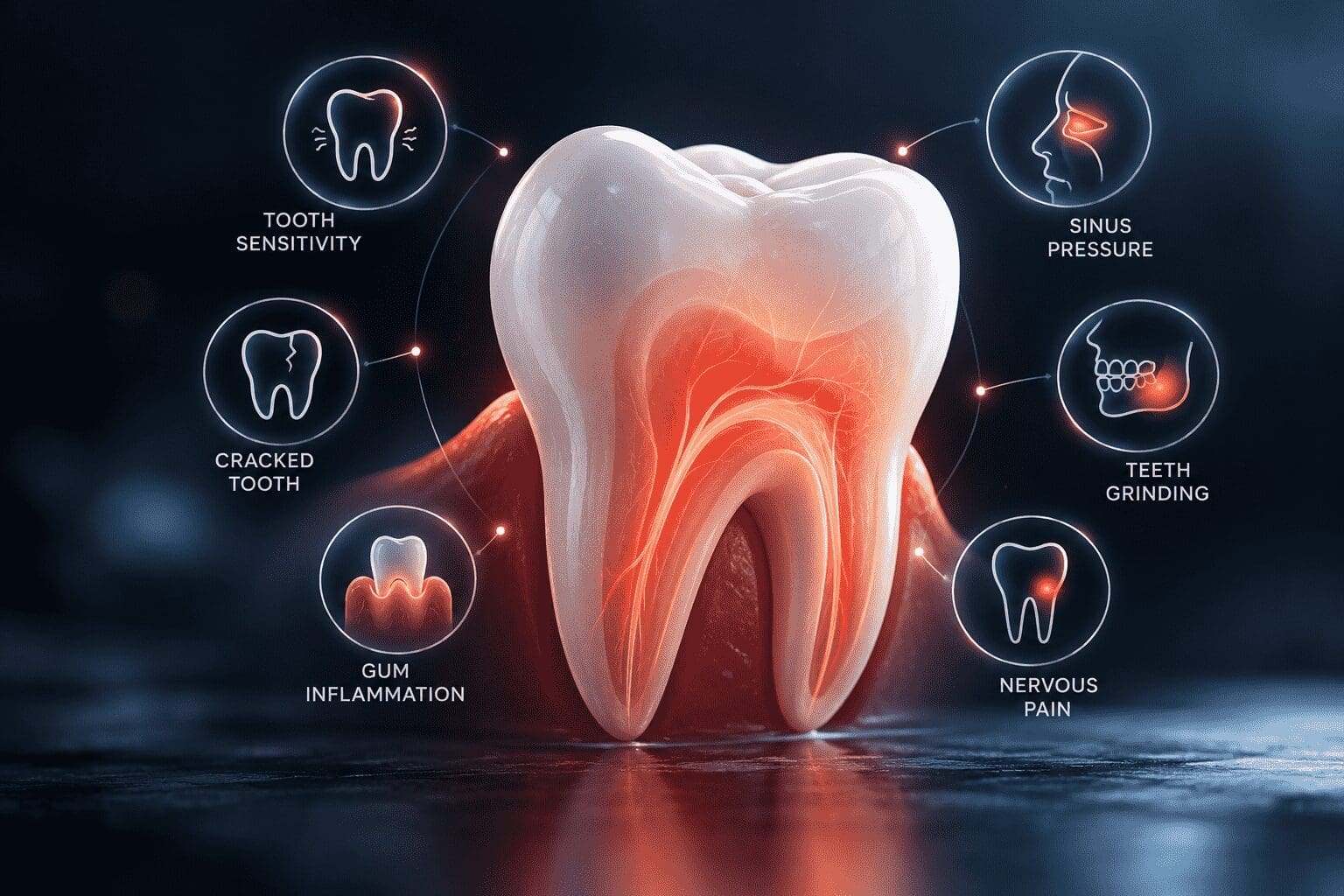
Experiencing a toothache but no cavity can be confusing, especially when you visit a dentist expecting a filling and are told that no decay is visible. Tooth pain does not always mean there is a cavity. Sometimes, the discomfort comes from the gums, tooth enamel, nerves, jaw muscles, or even the sinuses. Understanding the possible causes can help you recognise when professional dental care is needed and avoid treatments that may not address the actual problem.
For many people, tooth pain begins as a mild sensitivity to cold drinks, a dull ache while chewing, or discomfort that appears without an obvious trigger. Although these symptoms may seem minor at first, persistent or recurring pain deserves attention. Identifying the underlying cause is the first step towards appropriate treatment and protecting your long-term oral health.
What Does It Mean to Have a Toothache Without a Cavity?
A cavity develops when acids gradually damage the tooth’s hard outer layers, creating an area of decay. However, several other conditions can affect the sensitive tissues inside or around a tooth, producing similar symptoms.
Your teeth contain a soft inner tissue called the pulp, which includes nerves and blood vessels. Beneath the enamel and dentine, the pulp helps nourish the tooth and respond to external stimuli. When this tissue becomes irritated or inflamed, you may experience pain even if there is no obvious hole in the tooth.
A routine visual examination may not reveal every dental problem. Some conditions require dental X-rays, gum measurements, bite assessments, or additional tests to identify the source of discomfort.
It is also important to remember that pain can originate outside the tooth itself. The jaw joint, surrounding muscles, gums, and sinuses can sometimes produce pain that feels as though it is coming from a particular tooth.
Common Causes of Toothache When No Cavity Is Present
1. Tooth Sensitivity and Worn Enamel
Tooth sensitivity is one of the most common explanations for discomfort when no cavity is found. Enamel protects the underlying dentine, which contains microscopic channels connected to the nerve-rich inner part of the tooth. When enamel wears down or the gums recede, these channels become more exposed.
You might notice a sharp, brief sensation when drinking something cold, eating sweets, breathing in cold air, or brushing your teeth.
Common contributing factors include aggressive brushing, acidic foods and beverages, enamel erosion, and gum recession. Teeth grinding can also contribute to enamel wear over time.
Treatment depends on the cause and severity. A dentist may recommend desensitising toothpaste, fluoride treatments, changes to brushing technique, or protective dental procedures when necessary. Avoiding excessive acidic drinks and using a soft-bristled toothbrush can also help reduce further irritation.
2. Gum Disease or Gum Recession
Healthy gums support and protect the teeth. When plaque accumulates around the gumline, inflammation can develop, causing redness, swelling, tenderness, and bleeding during brushing or flossing.
Gum recession exposes the roots of the teeth, which do not have the same enamel protection as the visible crowns. As a result, the affected teeth may become sensitive to temperature changes or pressure.
In more advanced cases of gum disease, damage to the supporting tissues and bone can cause teeth to loosen or become uncomfortable when chewing.
A dentist can assess your gums and recommend appropriate cleaning, periodontal treatment, or other care based on the extent of the condition. Maintaining consistent oral hygiene and attending regular dental examinations are important for preventing further damage.
3. Cracked or Damaged Teeth
A small crack in a tooth can cause considerable discomfort without producing an obvious cavity. Cracks may develop after biting hard foods, sustaining an injury, grinding your teeth, or placing repeated pressure on a weakened tooth.
One characteristic symptom is pain when biting down or releasing the bite. You may also experience sensitivity to hot or cold foods, although symptoms can vary considerably.
Some cracks are difficult to identify during a routine examination because they may be too small to see clearly or may extend beneath the gumline.
Depending on the location and severity, treatment may involve a dental crown, bonding, or root canal treatment. A severely damaged tooth may require extraction. Early assessment is important because an untreated crack can extend further and make the tooth more difficult to restore.
4. Tooth Nerve Inflammation
The pulp inside a tooth can become inflamed because of trauma, repeated dental procedures, deep cracks, or other forms of irritation. This condition is known as pulpitis.
Although tooth decay is a common cause, it is not the only one. A tooth that has experienced an impact or significant wear may develop nerve inflammation without an obvious cavity.
Symptoms can include spontaneous pain, prolonged sensitivity to hot or cold temperatures, throbbing discomfort, or pain that becomes more noticeable at night.
Mild inflammation may sometimes settle once the source of irritation is addressed. However, irreversible pulp damage may require root canal treatment or extraction, depending on the tooth’s condition.
Pain that continues after a hot or cold stimulus has been removed, or that occurs without any clear trigger, should be evaluated promptly by a dentist.
5. Teeth Grinding and Jaw Clenching
Many people grind their teeth or clench their jaws without realising it, particularly during sleep or periods of stress. This habit, known as bruxism, places repeated pressure on the teeth and surrounding structures.
Over time, grinding may cause enamel wear, small cracks, muscle soreness, and tenderness around the roots of the teeth. You might wake up with a dull ache, jaw stiffness, headaches, or discomfort when chewing.
A dentist can examine your teeth for signs of grinding and assess whether your jaw muscles or bite are contributing to the pain. Depending on your needs, treatment may include a custom-fitted night guard, advice on reducing clenching, and management of associated jaw symptoms.
6. Sinus Pressure and Referred Pain
The roots of the upper back teeth sit relatively close to the maxillary sinuses. When these sinus cavities become inflamed or congested, pressure can sometimes feel like pain in several upper teeth.
This type of discomfort may become more noticeable when bending forward and may occur alongside nasal congestion, facial pressure, or a recent respiratory infection.
Unlike pain originating from a single damaged tooth, sinus-related discomfort may affect multiple upper teeth at once. However, symptoms alone cannot reliably distinguish sinus problems from dental conditions.
If tooth pain occurs with sinus symptoms, a healthcare professional or dentist can help determine the likely source and recommend suitable treatment.
Toothache but No Cavity: How Is the Cause Diagnosed?
When a tooth hurts but no decay is visible, the goal is to identify the precise source rather than assume that the tooth itself is damaged.
Your dentist may ask when the pain began, whether it occurs spontaneously, and whether chewing, temperature changes, or touching the tooth makes it worse. These details can help narrow down the possible causes.
The examination may include checking the gums, assessing the bite, tapping individual teeth gently, testing temperature sensitivity, and examining the jaw muscles. Dental X-rays may be recommended to look for problems beneath the visible tooth surface, including changes around the roots, hidden decay, or bone loss.
Not every condition appears on an X-ray. Small cracks, early nerve inflammation, and certain soft-tissue problems may require other examination techniques.
If the source remains unclear, further assessment or referral to a dental specialist may be appropriate. A clear diagnosis helps avoid unnecessary procedures and ensures that treatment targets the underlying problem.
What Can You Do to Relieve Tooth Pain at Home?
While waiting for a dental appointment, simple measures may help manage mild discomfort. Rinse your mouth gently with warm salt water, avoid foods that trigger sensitivity, and choose softer foods if chewing is uncomfortable. Continue brushing gently with fluoride toothpaste and clean between your teeth carefully.
If you can safely take an over-the-counter pain reliever, follow the product instructions and seek advice from a pharmacist or healthcare professional if you are unsure whether it is suitable for you.
People searching for natural remedies for tooth infection should understand that home remedies cannot eliminate a dental abscess or reliably treat an infection inside a tooth. Salt-water rinses may provide temporary comfort, but they do not replace professional treatment.
Avoid placing aspirin directly on the tooth or gums, applying undiluted essential oils, or using harsh substances that may burn or irritate oral tissues. Do not take leftover antibiotics without professional advice.
Most importantly, temporary pain relief does not necessarily mean the underlying condition has resolved. Persistent or recurring symptoms should be investigated even if they temporarily improve.
When Should You See a Dentist?
Arrange a dental appointment if the pain lasts longer than a day or two, repeatedly returns, becomes worse when chewing, or is accompanied by persistent sensitivity, gum bleeding, or a damaged tooth.
Seek urgent dental care if you notice swelling, pus, a bad taste associated with the affected area, fever, or rapidly worsening pain. These symptoms may indicate an infection that requires prompt treatment.
If swelling spreads towards the eye or neck, or you experience difficulty breathing or swallowing, seek emergency medical care immediately.
Do not wait for a visible cavity to appear before seeking help. Dental conditions can progress even when the outside of a tooth looks normal.
Finding the Right Treatment for Your Toothache
The right treatment depends on what is causing the pain. Sensitivity may improve with desensitising products and preventive care, while a cracked tooth may need restoration. Gum disease requires appropriate periodontal care, and an infected or irreversibly damaged tooth may need root canal treatment or extraction.
People looking for a cure for toothache should know that there is no single solution for every type of dental pain. Treating the cause, rather than simply masking the symptoms, offers the best opportunity for lasting relief.
If you need toothache treatment Campbelltown, arranging an assessment with a local dental professional can help identify the problem and determine the most appropriate next steps. Early care may also help prevent a manageable condition from becoming more complicated.
Similarly, effective dental ache treatment starts with an accurate diagnosis, whether the discomfort comes from sensitivity, gum inflammation, a cracked tooth, nerve irritation, or a problem outside the teeth.
Final Thoughts
Experiencing a toothache but no cavity does not mean that nothing is wrong. Tooth sensitivity, gum disease, cracked teeth, nerve inflammation, grinding, and sinus pressure can all cause discomfort without obvious decay. Paying attention to your symptoms and seeking professional advice when pain persists can help you receive the right treatment before the problem worsens. If your toothache keeps returning or affects your ability to eat, sleep, or go about your daily routine, arrange a dental examination rather than relying on temporary relief. Understanding the cause is the first step towards protecting your oral health and maintaining a comfortable, healthy smile.