
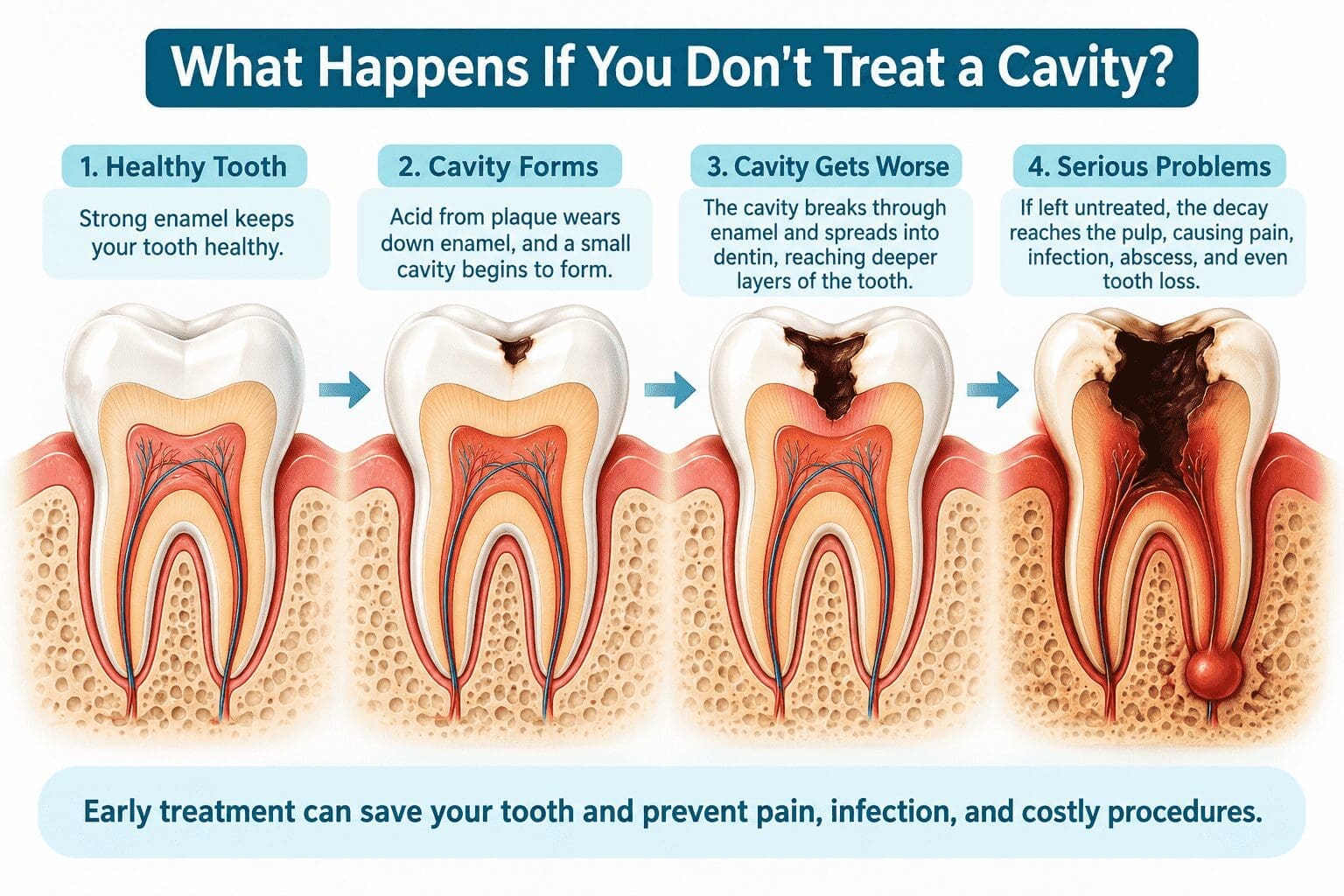
An untreated cavity may seem like a minor dental problem, especially when there is little or no pain. However, tooth decay does not usually stop on its own. What begins as a small area of enamel damage can gradually move deeper into the tooth, affecting the dentin, pulp, and surrounding tissues. Understanding what happens when a cavity is ignored can help you make a timely decision about dental care and avoid more complicated treatment later.
An untreated cavity can progress through several stages, and each stage may bring greater discomfort, more extensive treatment, and higher costs. Some cavities cause sensitivity to sweets or cold drinks, while others remain unnoticed until the damage becomes significant. Regular dental examinations are therefore important even when your teeth feel normal.
How Does a Cavity Develop?
A cavity develops when bacteria in dental plaque produce acids that gradually wear away the tooth’s protective enamel. Eating or drinking foods and beverages containing sugars and carbohydrates can provide fuel for these bacteria. Over time, repeated acid attacks can create a weak area in the enamel.
At first, the damage may appear as a white or chalky spot. At this stage, the tooth may still be capable of repairing some of the mineral loss through saliva and fluoride. Once a physical hole or cavity forms, however, the damage generally cannot be reversed naturally.
Without professional care, bacteria can continue moving deeper into the tooth. The speed of progression varies depending on oral hygiene, diet, saliva flow, the location of the cavity, and individual dental health.
What Happens If You Leave a Cavity Untreated?
Ignoring tooth decay can lead to a chain of problems rather than a single dental issue. The progression is not always predictable, but cavities commonly become more difficult to treat as they become deeper.
1. Enamel Damage Gets Worse
The earliest stage of decay affects enamel, which is the hard outer layer of the tooth. You may notice sensitivity or a visible change in color, but there may be no obvious symptoms.
Once decay breaks through the enamel, brushing alone cannot remove the damaged portion. A dentist may need to clean out the decay and restore the tooth with a filling.
2. Decay Reaches the Dentin
Under the enamel is dentin, a softer layer that is more vulnerable to bacterial damage. When decay reaches this layer, sensitivity can become more noticeable.
You might experience discomfort when consuming hot, cold, sweet, or acidic foods. Some people also notice pain while chewing. At this point, delaying treatment gives the bacteria more opportunity to move toward the center of the tooth.
3. The Tooth’s Pulp Can Become Infected
The pulp contains nerves and blood vessels. If decay reaches this inner area, bacteria can cause inflammation or infection. Pain may become stronger, persistent, or spontaneous rather than occurring only after eating or drinking something.
Treatment may then require a root canal instead of a simple filling. In some cases, the tooth may become so damaged that extraction is necessary.
Can an Untreated Cavity Cause an Abscess?
Yes. One of the more serious consequences of an untreated cavity is a dental abscess. An abscess is a pocket of infection that can develop around the tooth’s root or in the surrounding gum tissue.
Symptoms can include severe toothache, swelling, tenderness, a bad taste in the mouth, fever, or difficulty opening the mouth. Facial or jaw swelling can indicate that an infection is spreading and should receive prompt professional attention.
A dental abscess should not be treated as something that will simply disappear. A dentist needs to identify the source of the infection and determine the appropriate treatment. Depending on the condition of the tooth, treatment may involve drainage, root canal therapy, extraction, or other care.
Can a Cavity Damage the Surrounding Teeth?
A decayed tooth can affect more than just the tooth itself. Poor oral hygiene and the bacteria associated with dental plaque can contribute to decay in neighboring teeth as well.
When a severely damaged tooth changes the way you chew, you may also place additional stress on other teeth. If a tooth eventually needs to be removed, the resulting gap can affect chewing and the position of nearby teeth.
This is one reason dentists emphasize prevention and early treatment. Preventative dentistry focuses on reducing the likelihood of dental disease through examinations, professional cleanings, fluoride use, good home care, and appropriate dietary habits.
What Treatment Might Be Needed?
The treatment depends on how far the decay has progressed. A small cavity may be treated with a filling after the decayed portion is removed. A larger cavity may require a more extensive restoration, such as a crown, particularly if a significant amount of tooth structure has been lost.
If decay has reached the pulp, root canal treatment may be recommended to remove the infected tissue and preserve the tooth. When the tooth cannot be predictably restored, extraction may become the best option.
The goal is not simply to eliminate current discomfort. Proper treatment also helps preserve tooth structure, restore function, and prevent the problem from becoming more complicated.
Can Fluoride Help Prevent Tooth Decay?
Fluoride plays an important role in protecting teeth because it helps strengthen enamel and makes it more resistant to acid attacks. It can also support the remineralization of early areas of mineral loss.
A fluoride treatment dentist provides may be recommended for people who have a higher risk of developing cavities. Professional fluoride applications can be particularly useful when combined with regular brushing using fluoride toothpaste and good plaque control.
It is important to understand that fluoride cannot rebuild a tooth after a large cavity has formed. Fluoride treatment for tooth decay is most useful as part of prevention or management of very early mineral loss, rather than as a replacement for restorative treatment when a hole has already developed.
Why Regular Dental Checkups Matter
Many dental problems are easier to manage when discovered early. During an examination, a dentist can look for areas of decay that may not yet cause noticeable symptoms. Depending on your situation, dental X-rays may also help identify decay between teeth or other problems that are difficult to see during a routine examination.
Professional cleaning removes plaque and tartar that cannot always be removed effectively with a toothbrush. If you are comparing the dentist clean and check up cost, remember that pricing can vary according to location, the type of examination, cleaning requirements, dental insurance, and whether additional X-rays are needed.
Similarly, the check up and clean dentist cost may differ between practices and according to your individual oral health needs. Asking the dental office for a breakdown of the services included can make the cost easier to understand.
How Can You Prevent Cavities From Getting Worse?
Good home care is an important part of keeping existing teeth healthy and reducing the risk of future decay. Brush twice daily with fluoride toothpaste, clean between your teeth regularly, and limit frequent exposure to sugary foods and drinks.
Regular dental visits also make it easier to identify small problems before they become extensive. Depending on your risk level, your dentist may recommend additional preventive measures, including professional fluoride applications.
This broader approach is part of preventative dentistry, which aims to maintain oral health rather than waiting for significant symptoms to appear. Prevention does not guarantee that every cavity can be avoided, but it can substantially reduce the risk of dental problems and help detect them earlier.
When Should You See a Dentist?
You should schedule a dental appointment if you notice tooth sensitivity, visible discoloration, a hole or rough area on a tooth, pain when chewing, persistent toothache, or food repeatedly getting trapped in one location.
Do not wait for severe pain before seeking care. Some cavities can become significantly larger without causing obvious symptoms. If you develop facial swelling, fever, severe pain, difficulty swallowing, or difficulty breathing, seek urgent dental or medical attention because these symptoms can indicate a potentially serious infection.
For people at increased risk of decay, a fluoride treatment dentist may also recommend additional preventive care based on factors such as previous cavities, dry mouth, diet, oral hygiene, and other individual circumstances. Likewise, fluoride treatment for tooth decay may be discussed when early enamel changes are identified.
The Bottom Line
A cavity is much easier to manage when it is addressed early. Leaving an untreated cavity can allow decay to move from the enamel into deeper layers of the tooth, potentially resulting in infection, an abscess, root canal treatment, or tooth loss. Regular examinations, professional cleanings, fluoride when appropriate, and consistent home care can all help protect your teeth. If you suspect you have an untreated cavity, arranging a dental examination sooner rather than later can give you the best opportunity to preserve the natural tooth and avoid more complex treatment.