
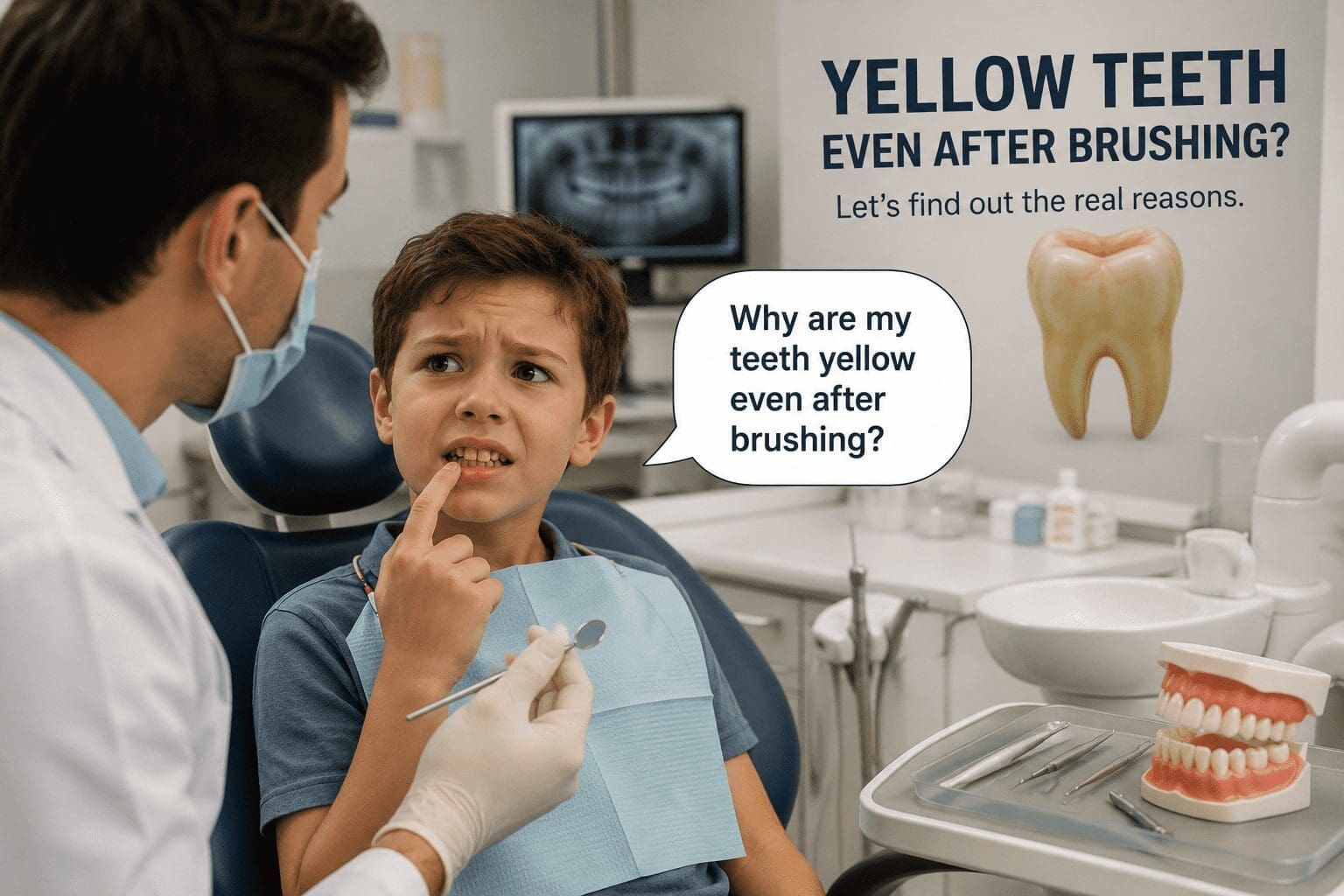
Yellow teeth can be frustrating, especially when you brush twice a day, floss regularly, and still notice a yellowish appearance when you look in the mirror. While brushing is essential for keeping your mouth clean, it cannot remove every type of tooth discoloration. Stains can develop inside the tooth, beneath the enamel, or because of changes in the enamel itself.
If you are searching for teeth bleaching near me, it is important to understand what is actually causing the discoloration before choosing a treatment. Yellow-looking teeth are not always a sign of poor oral hygiene, and in some cases, they may be completely normal.
Why Are My Teeth Yellow Even After Brushing?
Brushing removes plaque, food particles, and some surface stains, but it does not reverse every form of tooth discoloration. Teeth can appear yellow for several different reasons, ranging from natural enamel characteristics to lifestyle habits and dental conditions.
The outer layer of the tooth, called enamel, is naturally translucent. Underneath it is dentin, which has a naturally yellow or light-brown color. As enamel becomes thinner with age, more of the dentin can show through, making teeth appear increasingly yellow even when they are clean.
Other causes include staining from coffee, tea, red wine, tobacco, certain foods, inadequate brushing technique, enamel erosion, and some medications. Dental plaque and tartar can also contribute to a darker or yellow appearance.
Common Causes of Yellow Teeth
Natural Tooth Color
Not everyone’s teeth are naturally bright white. Tooth color varies from person to person because of differences in enamel thickness, dentin color, genetics, and age.
A slightly yellow or cream-colored shade can therefore be completely healthy. Teeth do not need to look paper-white to be clean.
Food and Drinks
Frequently consuming strongly colored foods and beverages can cause surface staining. Coffee, tea, cola, berries, curry, tomato-based foods, and red wine are common examples.
These stains may gradually become more noticeable if they are not addressed through professional cleaning or appropriate whitening treatment.
Smoking and Tobacco
Tobacco products can cause significant tooth staining. Nicotine and tar can contribute to yellow or brown discoloration, while long-term tobacco use can make stains increasingly difficult to remove with normal brushing.
Tobacco use is also associated with gum disease, bad breath, tooth loss, and several serious oral health problems, making dental evaluation particularly important.
Enamel Erosion
Acid exposure can gradually weaken tooth enamel. Frequent consumption of acidic drinks, acid reflux, or certain dietary habits may contribute to enamel erosion.
As enamel becomes thinner, the naturally yellow dentin underneath becomes more visible. Whitening may not solve the underlying problem if enamel erosion is responsible for the color change.
Aging
Tooth color commonly changes with age. Enamel gradually becomes thinner, while dentin remains underneath. Years of exposure to food, beverages, and other staining factors can also contribute to discoloration.
For older adults, a change in tooth color should be assessed in context rather than assuming that whitening is automatically the best solution.
Yellow Teeth: When Is It a Dental Problem?
Yellow teeth are not necessarily a medical concern, but sudden or uneven discoloration deserves attention.
If one tooth becomes significantly darker than the surrounding teeth, the change may be associated with trauma, decay, infection, or changes inside the tooth. A dentist can examine the tooth and determine whether the discoloration is cosmetic or related to an underlying dental condition.
You should also consider seeing a dentist if discoloration appears alongside tooth sensitivity, pain, bleeding gums, swelling, bad breath, visible holes, or changes in the shape or surface of the teeth.
A dental examination can help identify the cause before any cosmetic treatment is recommended.
Can Brushing Make Yellow Teeth White?
Brushing is important for maintaining healthy teeth, but brushing harder does not necessarily make teeth whiter.
Aggressive brushing can actually damage enamel and irritate the gums. Instead, use a soft-bristled toothbrush, fluoride toothpaste, and gentle circular movements. Cleaning between the teeth is equally important because plaque can accumulate in areas a toothbrush cannot reach effectively.
Professional dental cleaning may also help when discoloration is caused by plaque, tartar, or surface staining.
However, stains located deeper within the tooth generally require a different approach.
What Are the Options for Professional Whitening?
When ordinary cleaning does not improve tooth color, a dentist may discuss cosmetic whitening options based on the condition of your teeth and gums.
Professional teeth whitening is designed to lighten natural tooth structure using clinically controlled whitening agents. A dental professional can evaluate existing restorations, enamel condition, cavities, gum health, and sensitivity before recommending treatment.
People with sensitive teeth may need a customized approach. Searching for the best teeth whitening for sensitive teeth should not be based solely on the strongest whitening product. The most appropriate option depends on the individual’s dental condition, sensitivity level, and treatment goals.
Some patients may also ask about laser teeth whitening near me when looking for faster cosmetic treatment. Laser-assisted or light-assisted whitening may be offered by some dental practices, but suitability should be determined by a qualified dental professional rather than by marketing claims alone.
What About Whitening Toothpaste?
Whitening toothpaste can help remove some external stains, particularly those caused by foods and drinks. However, most whitening toothpastes cannot dramatically change the natural internal color of a tooth.
Using an overly abrasive product or brushing aggressively can contribute to enamel wear. If your teeth are becoming more yellow despite regular brushing, the problem may not be something that a whitening toothpaste can address.
A dentist can help determine whether the discoloration is caused by surface staining, natural dentin visibility, enamel changes, or another dental issue.
Are Dental Sealants Related to Tooth Color?
Dental sealants serve a different purpose from whitening treatments. Dental sealants Campbelltown patients may receive are thin protective coatings applied primarily to the chewing surfaces of certain teeth.
The purpose of sealants for teeth is to help protect vulnerable grooves and pits from plaque and food accumulation that can contribute to tooth decay. They are preventive dental treatments, not cosmetic whitening procedures.
Understanding this distinction is important because different dental concerns require different treatments. A tooth that looks yellow because of staining cannot necessarily be improved through preventive procedures such as sealants.
When Should You See a Dentist About Yellowing?
A professional dental assessment is worthwhile when tooth discoloration persists despite good oral hygiene or when the change is unusual for you.
You should especially seek an evaluation if:
- One tooth suddenly becomes darker than the others.
- Yellowing is accompanied by pain or sensitivity.
- You notice bleeding, swollen gums, or persistent bad breath.
- There are visible cracks, holes, or changes in the tooth surface.
- Whitening products are causing significant discomfort.
- Your teeth have become noticeably darker over a short period.
A dentist can determine whether you need cleaning, restorative treatment, whitening, or simply reassurance that your natural tooth color is healthy.
How Can You Prevent Further Tooth Discoloration?
Maintaining consistent oral hygiene is the foundation of preventing avoidable staining. Brush twice daily with fluoride toothpaste, clean between your teeth, attend regular dental examinations, and have professional cleanings when recommended.
Limiting frequent exposure to staining drinks can also help. If you drink coffee or tea regularly, rinsing your mouth with water afterward can reduce the amount of staining material that remains on the teeth.
Avoid using household substances or excessively abrasive products to whiten teeth. DIY methods involving acids or harsh abrasives may damage enamel and potentially make discoloration more noticeable over time.
Choosing the Right Dental Treatment
The best treatment depends on why your teeth look yellow rather than simply how yellow they appear.
For surface stains, professional cleaning may be sufficient. For natural discoloration, a dentist may discuss whitening. If decay, enamel erosion, trauma, or another dental problem is involved, treating the underlying condition should come before cosmetic improvement.
A consultation with a dentist provides an opportunity to establish realistic expectations and select an approach that protects both appearance and oral health.
Final Thoughts
If your yellow teeth remain noticeable even though you brush regularly, do not assume that you are doing something wrong. Tooth color can be influenced by genetics, enamel thickness, aging, diet, tobacco use, staining, and underlying dental conditions. Brushing is essential for oral health, but it cannot correct every cause of discoloration. When yellowing is persistent, sudden, uneven, or accompanied by pain or sensitivity, seeing a dentist is the safest way to identify the cause and determine whether professional cleaning, whitening, or another treatment is appropriate.