
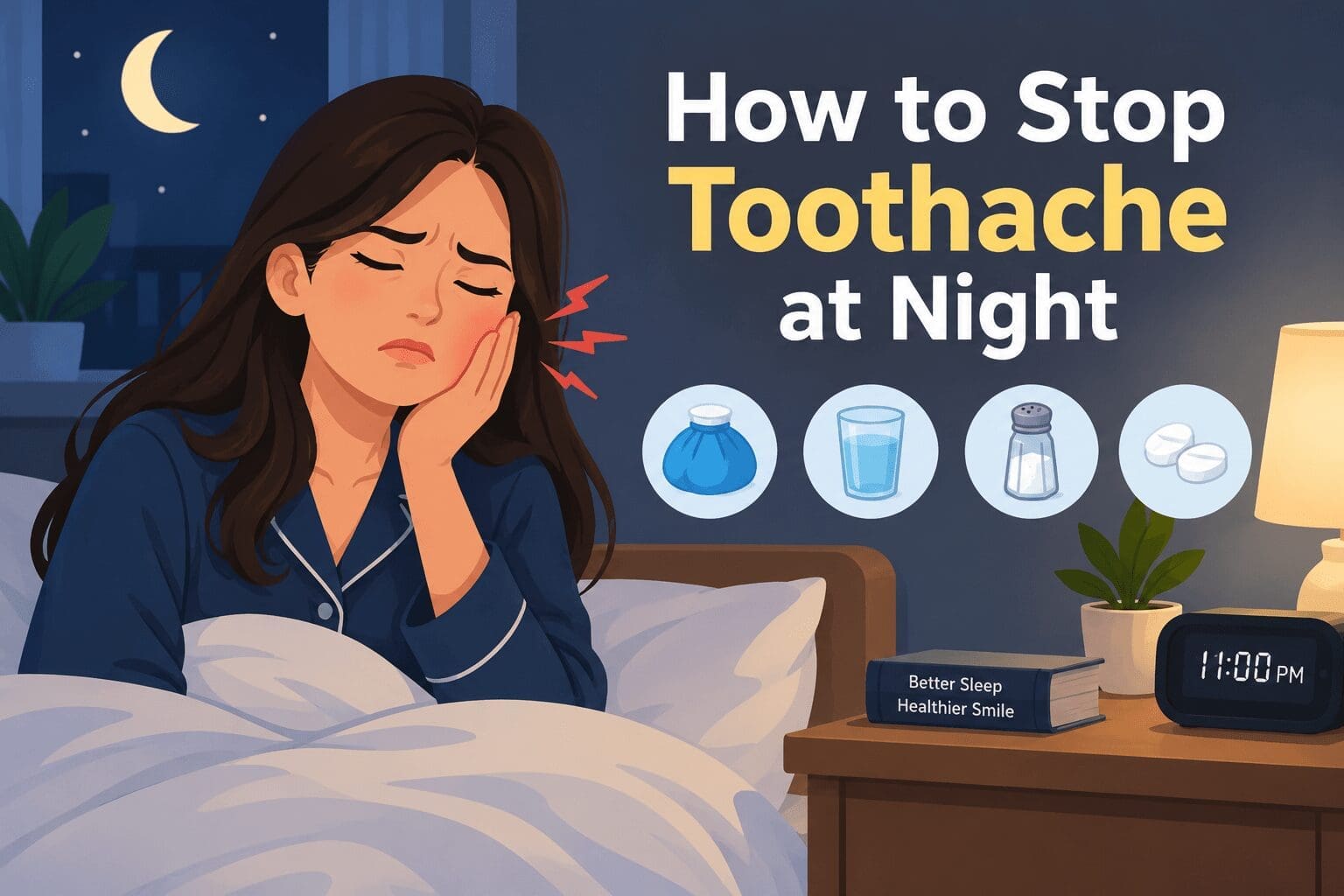
A toothache can feel much worse when it starts after bedtime. The quiet makes every pulse and throb more noticeable, while lying down can make it harder to ignore the discomfort. If you are searching for how to stop toothache at night, the goal should be to calm the pain safely until you can arrange proper dental care—not simply cover up the problem. Toothache can result from decay, a cracked tooth, gum disease, an abscess, a damaged filling, sensitivity, or even grinding.
Knowing how to stop toothache at night can help you get through the next few hours more comfortably, but home care cannot repair a cavity, treat a dental infection, or fix a damaged tooth. Temporary measures can reduce discomfort while you arrange an appointment, particularly when dental services are closed. If the pain persists, keeps returning, or becomes difficult to control, a dentist should determine what is causing it.
Why Does Tooth Pain Get Worse at Night?
There is not always one reason for nighttime discomfort. When you lie down, changes in pressure and blood flow around the head may make an already irritated tooth feel more noticeable. At night, you also have fewer distractions, so pain that was manageable during the day can suddenly seem intense.
The underlying problem matters more than the time of day. Tooth decay can expose sensitive inner parts of a tooth. A crack may irritate the nerve, while gum inflammation can cause soreness around the tooth. An infection or abscess may cause persistent, throbbing pain and may be accompanied by swelling, a bad taste, fever, or pain when biting.
What to Do for a Toothache at Night
If dental treatment is not immediately available, start with simple measures that are unlikely to irritate the affected area.
Rinse Your Mouth Gently
Rinse with warm water to help clear food particles and debris. A warm salt-water rinse can also be useful for temporary comfort. The NHS recommends dissolving half a teaspoon of salt in a glass of warm water, rinsing, and spitting it out rather than swallowing it.
Avoid extremely hot or cold water if your tooth is sensitive, as temperature changes can trigger additional pain.
Keep Your Head Elevated
Instead of lying completely flat, try resting with your head slightly elevated on an extra pillow. This may make nighttime throbbing feel less noticeable for some people.
Try not to sleep directly on the painful side of your face. Pressure against the cheek or jaw may make an already tender area feel more uncomfortable.
Use a Cold Compress
If the toothache is associated with an injury or facial tenderness, a cold compress placed against the outside of the cheek may help reduce discomfort. Use it for short periods rather than holding ice directly against your skin or tooth. Mayo Clinic recommends a cold compress as a self-care measure when tooth pain follows trauma.
Consider Appropriate Pain Relief
Over-the-counter pain medication may provide temporary relief when used according to the product instructions and when it is safe for you to take.
The American Dental Association’s current guidance supports non-opioid pain medicines, including NSAIDs such as ibuprofen or naproxen, alone or in combination with acetaminophen, for temporary management of acute dental pain in appropriate adults and adolescents.
However, medication is not appropriate for everyone. People with certain medical conditions, allergies, medication interactions, pregnancy-related considerations, or other restrictions should speak with a healthcare professional or pharmacist before taking a particular medicine.
Never place aspirin directly against the tooth or gum. It can irritate or burn gum tissue.
Toothache Remedy at Night: What Actually Helps?
A practical toothache remedy at night should focus on reducing irritation rather than trying unproven methods that could damage the mouth.
Choose soft foods if you need to eat, and avoid chewing with the painful tooth. Very sweet, hot, or cold foods may trigger sensitivity. Keep brushing your teeth gently, but avoid aggressive brushing around an especially tender area.
Be cautious about applying household substances directly to the tooth or gum. Strong chemicals, concentrated essential oils, alcohol, or undiluted products can irritate oral tissues. Home remedies may provide a sensation of temporary relief without addressing the dental condition underneath.
Severe Toothache: When Should You Seek Urgent Care?
A severe toothache should not automatically be treated as something you can wait out. If pain is preventing you from sleeping or carrying out normal activities and is not controlled by appropriate pain medication, urgent dental advice may be necessary.
You should also seek prompt dental care if you develop:
Facial or jaw swelling
Fever
A bad or foul taste in the mouth
Pain when biting
Red or swollen gums
Persistent or worsening pain
Symptoms suggesting an abscess
A dental abscess is an infection that requires dental treatment and does not simply disappear on its own.
When Is a Toothache an Emergency?
Some symptoms require immediate medical attention rather than waiting for a routine dental appointment.
If swelling around your mouth, throat, or neck is making it difficult to breathe, swallow, or speak, seek emergency medical care. Significant facial swelling or swelling around the eye can also require urgent assessment.
These symptoms can indicate that an infection or swelling is affecting areas beyond the tooth itself.
How to Relieve Toothache at Night Without Making It Worse
When you are trying to relieve toothache at night, it can be tempting to keep experimenting with different remedies. Instead, keep your approach simple.
Rinse gently, avoid foods and drinks that trigger sensitivity, keep your head elevated, use a cold compress when appropriate, and consider a suitable over-the-counter pain reliever according to professional guidance and the label.
Do not repeatedly apply medication directly to the gum, exceed recommended doses, or combine medicines without checking whether they can safely be taken together. Temporary toothache relief should be treated as a bridge to dental treatment, not as a replacement for it.
Why You Shouldn’t Ignore Tooth Pain
Pain is often your body’s warning that something needs attention. A small cavity can progress deeper into the tooth, while a crack or infection can become more complicated if treatment is delayed. Tooth decay can eventually affect deeper layers of the tooth and cause significant pain or infection.
Even if the pain suddenly disappears, that does not necessarily mean the underlying problem has healed. Some dental problems can fluctuate before becoming painful again.
If you have recurring tooth pain at night, make a dental appointment rather than repeatedly managing the symptoms at home.
How Dentists Treat the Underlying Problem
The treatment depends on the cause. A dentist may examine the tooth, gums, bite, and surrounding tissues and may recommend dental imaging when appropriate.
A cavity may require a filling or other restorative treatment. A damaged or cracked tooth may need restoration depending on its condition. If the nerve inside the tooth is seriously inflamed or infected, root canal treatment or another dental procedure may be considered. An abscess generally requires treatment aimed at removing the source of infection and draining it when necessary.
This is why there is no single home solution that works for every toothache.
Simple Ways to Relieve Tooth Pain in the Future
The best ways to relieve tooth pain long-term involve preventing the dental problems that commonly cause it. Brush twice a day with fluoride toothpaste, clean between your teeth daily, limit frequent sugary foods and drinks, and attend regular dental checkups.
If you grind your teeth, have frequent sensitivity, or regularly wake with jaw or tooth discomfort, mention it to your dentist. Identifying the reason for recurring pain can help prevent another sleepless night.
Final Thoughts
If you are wondering what to do for a toothache at night, focus on safe temporary measures and arrange dental care as soon as possible. Rinsing gently, avoiding triggers, elevating your head, using a cold compress when appropriate, and taking suitable pain relief can help you manage discomfort temporarily. But if pain persists, becomes severe, or comes with swelling, fever, or difficulty breathing or swallowing, seek urgent professional care. Most importantly, how to stop toothache at night is not just about getting through the night—it is about finding and treating the dental problem causing the pain.
This article is for general informational purposes and does not replace an examination or diagnosis by a dentist. Medication advice should be checked with a dentist, doctor, or pharmacist based on your individual circumstances.