
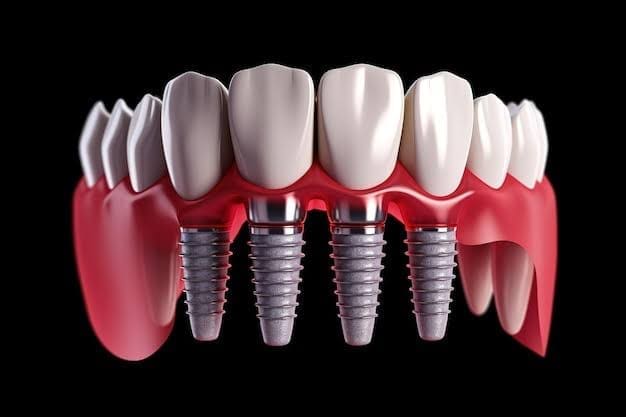
Losing a tooth leaves more than a gap. It can change how you chew, how you speak and how you feel about your smile. If you are weighing up dental implants vs bridge treatment, you are choosing between two well-established ways to replace a missing tooth, and the right answer depends on your teeth, your gums, your budget and how long you want the result to last.
In this guide, we compare how each option works, how long it lasts, what it costs and who it suits best. By the end, you will know which questions to ask your dentist so you can make a confident decision.
What Is a Dental Implant?
A dental implant is a small titanium or ceramic post that is placed into your jawbone to act as an artificial tooth root. Over a few months, the bone bonds with the post. A custom-made crown is then attached on top, so the new tooth looks and feels much like a natural one.
Because the implant sits in the bone, it does not rely on the teeth next to the gap for support. It also helps keep the jawbone stimulated, which can slow the bone loss that often follows tooth loss.
What Is a Dental Bridge?
A dental bridge replaces a missing tooth by joining an artificial tooth (called a pontic) to crowns placed on the teeth on either side of the gap. Those neighbouring teeth act as anchors, so the bridge is held firmly in place.
There are several types of bridge:
- Traditional bridge: crowns on the teeth either side of the gap hold the replacement tooth in the middle. This is the most common type.
- Cantilever bridge: the replacement tooth is supported by a crown on one side only. It is used less often because of the extra stress on the anchor tooth.
- Resin-bonded (Maryland) bridge: the replacement tooth has small wings bonded to the back of the neighbouring teeth, with less tooth preparation.
- Implant-supported bridge: several missing teeth are replaced by a bridge that is held by implants instead of natural teeth.
You can read more about this option on our crowns and bridges page.
Dental Implants vs Bridge: A Side-by-Side Comparison
| Dental implant | Dental bridge | |
|---|---|---|
| How it is held in | Anchored in the jawbone | Supported by the neighbouring teeth |
| Effect on neighbouring teeth | Not altered | Usually need to be shaved down for crowns |
| Jawbone | Helps keep the bone stimulated | Does not stimulate the bone under the gap |
| Typical lifespan | Many years with good care, often decades | Often around 10 to 15 years |
| Treatment time | Several months, including healing | Often a few weeks and fewer visits |
| Surgery | Yes, a minor surgical procedure | No surgery |
| Upfront cost | Higher | Lower |
| Cleaning | Brush and floss like a natural tooth | Needs special cleaning under the bridge |
Lifespans vary with your oral hygiene, bite and general health.
Pros and Cons of Dental Implants
Advantages
- They do not involve grinding down healthy neighbouring teeth
- They help protect the jawbone where the tooth is missing
- They are designed to be long lasting with good care
- They look, feel and function much like a natural tooth
- Each tooth is cleaned in the same way as your natural teeth
Disadvantages
- They need minor oral surgery and a healing period of several months
- The upfront cost is higher than a bridge
- You need enough healthy jawbone, or a bone graft first
- They are not ideal if you have untreated gum disease, and smoking raises the risk of failure
Pros and Cons of Dental Bridges
Advantages
- The treatment is usually completed faster than an implant
- There is no surgery and no need for healthy bone at the gap
- The upfront cost is generally lower
- They can work well when the neighbouring teeth already need crowns
Disadvantages
- Healthy neighbouring teeth may need to be reshaped to hold the crowns
- The anchor teeth carry extra load and can be at higher risk of decay or damage
- Bone under the missing tooth can continue to shrink over time
- Food can collect under the bridge, so careful cleaning is essential
- A bridge may need replacing after 10 to 15 years or sooner, depending on care
Dental Implants vs Bridge: What Does Each One Cost?
A bridge usually has the lower upfront cost, while an implant costs more at the start but is designed to last longer. Over many years, some patients find the two options become closer in overall cost, particularly if a bridge needs replacing or an anchor tooth needs further treatment.
The price of either option depends on the number of teeth, the materials used, whether extractions or bone grafting are needed and the dentist’s fees. If you are comparing quotes for dental implants Campbelltown clinics provide, ask for an itemised written quote that lists the implant, abutment, crown, scans and review visits, so you can compare like for like.
For more detail, read our guide on how much dental implants cost. Medicare does not cover dental implants or bridges, and private health extras policies pay different amounts depending on your level of cover, so check your limits and waiting periods before you start. Ask our team about payment plan options if you want to spread the cost.
Which Option Suits You Better?
Only a dental examination can tell you for certain, but these guidelines may help.
An implant may suit you if:
- The neighbouring teeth are healthy and you would prefer not to alter them
- You have enough jawbone, or you are happy to have a bone graft
- You want a long-term solution and can commit to regular check-ups
- Your gums are healthy, or any gum disease has been treated first
A bridge may suit you if:
- The teeth either side of the gap already have large fillings or crowns
- You prefer a shorter treatment time and want to avoid surgery
- You have health conditions or medications that make surgery less suitable
- You do not have enough bone and do not want a graft
The best choice also depends on where the missing tooth is, how you bite and what you can budget for.
What If You Are Missing Most of Your Teeth?
A bridge works when only one or a few teeth are missing and healthy teeth remain on either side. If most of your teeth are missing or failing, a bridge is rarely suitable, and a denture or a full-arch implant solution is usually considered instead.
Options include full mouth dental implants, which replace the teeth in one or both jaws using a small number of implants to support fixed teeth. One well-known approach is all on 4 dental implants, where four implants hold a complete arch. Many people searching for all on four dental implants Campbelltown clinics offer are surprised to learn that it is a separate treatment with its own planning, stages and costs, so it is worth asking your dentist whether it suits your jaw and bite. If you would rather keep a removable option, you can read about dentures and denture care.
How to Choose the Right Dentist
The materials matter, but so does the dentist who plans your treatment. When you search for dental implants near me or compare bridge providers, look beyond distance and ask:
- Who will plan and carry out the treatment, and what are their qualifications?
- What scans and imaging will be used to plan your case?
- Is the quote itemised, with the stages and review visits explained?
- Are both options discussed honestly, or is only one recommended?
- Is aftercare close by? Both implants and bridges need regular check-ups and professional cleans.
A good dentist will explain the pros and cons of each option for your mouth and will not pressure you into either one.
Looking After an Implant or a Bridge
Whichever option you choose, daily care protects your investment:
- Brush twice a day with a soft toothbrush and fluoride toothpaste
- Clean between your teeth daily; with a bridge, use floss threaders or interdental brushes to clean under the replacement tooth
- Attend regular check-ups and professional cleans
- Avoid chewing very hard objects such as ice or pen lids
- Do not smoke, as smoking increases the risk of implant failure and gum disease
Frequently Asked Questions
Are implants better than bridges?
Neither is better for everyone. Implants avoid altering neighbouring teeth and help protect the bone, while bridges are quicker, avoid surgery and usually cost less upfront. Your dentist will recommend the option that suits your teeth, gums and goals.
How long does a bridge last compared with an implant?
A bridge often lasts around 10 to 15 years, though it can need replacing sooner. An implant is designed to last many years with good care, although the crown on top may eventually need repair or replacement.
Does a bridge damage the teeth next to it?
A traditional bridge needs the neighbouring teeth to be reshaped to hold crowns, which removes some healthy enamel. Those anchor teeth also carry extra load, so they need good care.
Can I switch from a bridge to an implant later?
Often yes, if there is enough bone and your gums are healthy, although the old bridge will need to be removed and the neighbouring teeth will already have been prepared. Bone loss over time can mean extra steps, so it is worth discussing this early.
Is implant surgery painful?
The procedure is done under local anaesthetic, and some dentists also offer comfort options for nervous patients. Some soreness and swelling afterwards is common, and your dentist will give you aftercare instructions.
Does Medicare cover dental implants or bridges?
Medicare does not cover dental implants or bridges for most adults. Some private health extras policies pay a portion, with limits and waiting periods, so check with your fund before treatment.
Not Sure Which Option Is Right for You?
The best way to settle the dental implants vs bridge question is a proper assessment. At Family Dental Care in Campbelltown, we will examine your teeth, gums and bone, explain your options in plain language and give you a clear written quote.
Book Your Consultation Online | Call (02) 4625 4897