
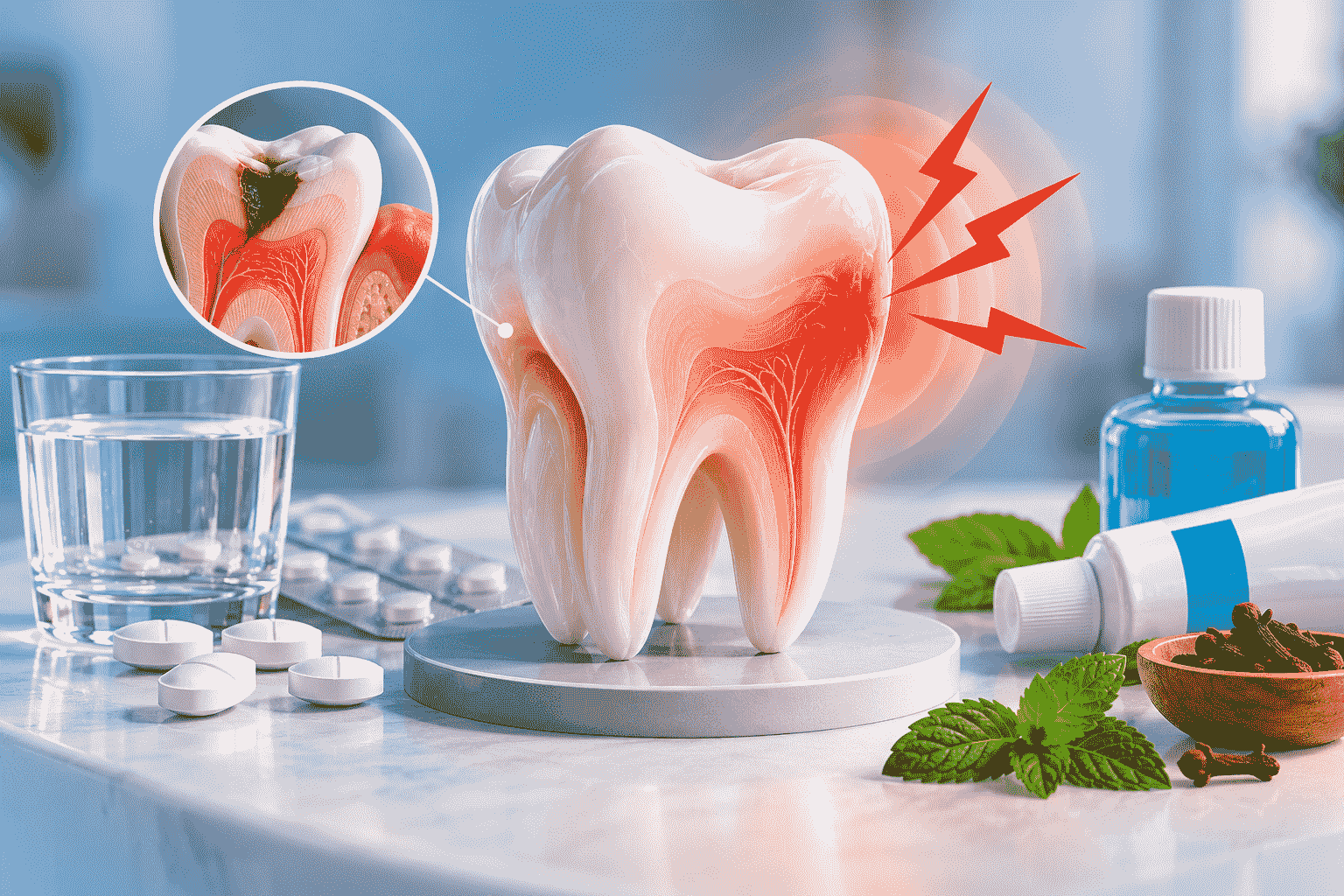
Tooth pain can make it difficult to eat, work, sleep, or even concentrate on everyday activities. Finding the right medicine for tooth pain may provide temporary relief while you arrange a dental appointment, but the best option depends on what is causing the pain and your overall health. A pain reliever can reduce discomfort, but it usually cannot remove the underlying dental problem.
Why Does Tooth Pain Happen?
Tooth pain is not a condition on its own. It is usually a sign that something is affecting the tooth, gums, or surrounding tissues. Common causes include tooth decay, cavities, cracked or damaged teeth, gum infections, dental abscesses, exposed tooth roots, worn enamel, and inflammation inside the tooth.
Sometimes the pain is mild and appears only when you eat something hot, cold, or sweet. In other cases, it can become constant, throbbing, or severe enough to wake you during the night.
Understanding the cause matters because different dental problems require different treatments. For example, a cavity may need a filling, while an infected tooth may require root canal treatment or another form of dental care.
Which Medicines Can Help With Tooth Pain?
For short-term dental pain, non-opioid pain relievers are commonly considered first-line options. The American Dental Association recommends nonsteroidal anti-inflammatory drugs (NSAIDs), such as ibuprofen or naproxen, with or without acetaminophen, for temporary management of acute dental pain in appropriate patients.
NSAIDs can be particularly useful because inflammation is often involved in dental pain. Acetaminophen works differently and may also help relieve pain. In some situations, a dentist or healthcare professional may recommend using different types of pain relievers together, but this should be done according to professional advice and the instructions on the medication label.
The best over the counter medicine for tooth pain is not necessarily the same for everyone. Your age, existing health conditions, allergies, pregnancy status, and other medicines you take can affect which option is appropriate.
Ibuprofen and Other NSAIDs
Ibuprofen belongs to a group of medicines called NSAIDs. These medicines help reduce inflammation as well as pain, which is why they can be useful for many types of dental discomfort.
However, NSAIDs are not suitable for everyone. People with certain stomach, kidney, cardiovascular, bleeding, or medication-related concerns may need to avoid them or use them only after speaking with a healthcare professional.
It is also important not to assume that taking a larger amount will provide better relief. Taking more than the recommended amount can increase the risk of side effects without necessarily improving pain control.
Acetaminophen for Toothache
Acetaminophen is another commonly used pain reliever. Unlike NSAIDs, it does not work primarily by reducing inflammation. It can still help manage dental pain and may be an option for people who cannot take NSAIDs.
One important consideration is that acetaminophen can be included in several combination medicines. Taking multiple products that contain acetaminophen can unintentionally result in taking too much.
Always check the active ingredients on medicine packaging and follow the recommended dose. If you have liver disease, regularly drink alcohol, or take other medicines, speak with a healthcare professional before using it.
What Is the Strongest Pain Relief for Toothache?
People often search for the strongest pain relief for toothache when the discomfort becomes intense. However, stronger does not always mean safer or more effective. The appropriate treatment depends on the source and severity of the pain.
Current dental guidance generally supports non-opioid medicines as the first choice for temporary management of acute dental pain. Opioid medicines are not routinely recommended and may be considered only in specific situations under professional supervision.
If pain remains severe despite appropriate over-the-counter treatment, this is a reason to contact a dentist rather than simply taking increasingly strong medication. Persistent or worsening pain can indicate an infection, significant decay, inflammation of the tooth pulp, or another problem requiring dental treatment.
What If the Pain Is Caused by a Cavity?
A cavity develops when acids gradually damage the tooth’s hard outer layers. As decay progresses deeper into the tooth, it can cause sensitivity and eventually significant pain.
People searching for medicine for cavity pain should remember that pain medicine only manages the symptom temporarily. It does not repair the damaged tooth.
Depending on how advanced the decay is, treatment may involve a filling, a crown, root canal treatment, or another procedure. Treating the cavity early can help prevent the problem from becoming more complicated.
Can You Take Pain Medicine Before Seeing a Dentist?
In many cases, a suitable pain reliever can temporarily make toothache more manageable while you wait for dental care. However, medication should not be used as a reason to postpone an appointment.
The American Dental Association describes pain medicines as temporary management when definitive dental treatment is not immediately available. The underlying dental problem still needs to be addressed.
If you already take prescription medicines or have conditions such as kidney disease, liver disease, stomach ulcers, bleeding problems, or cardiovascular disease, ask a healthcare professional which pain reliever is appropriate before taking one.
What Should You Avoid When You Have Tooth Pain?
When your tooth hurts, it can be tempting to try anything that promises fast relief. Some approaches, however, can make the situation worse.
Avoid placing aspirin directly against the tooth or gums. Aspirin is intended to be swallowed, and direct contact with the gums can irritate or damage the tissue.
It is also better to avoid repeatedly taking pain medicine beyond the recommended amount. More medication does not necessarily mean faster relief and can increase the risk of serious side effects.
Until you can see a dentist, you may also find it helpful to avoid foods and drinks that trigger your pain, particularly very hot, cold, sugary, or acidic items.
When Should You See a Dentist for Tooth Pain?
Toothache should not be ignored simply because pain medicine makes it feel better. If pain continues, returns repeatedly, or becomes more intense, a dental examination is important.
You should arrange dental care particularly if you experience:
Tooth pain lasting more than a couple of days
Pain that does not improve with appropriate pain relief
Facial or jaw swelling
Fever or feeling unwell
Pain when biting
A bad taste or discharge around the tooth
Significant sensitivity or a broken tooth
These symptoms can sometimes indicate an infection or another problem that requires prompt treatment.
When Is Tooth Pain an Emergency?
Some dental symptoms require urgent medical attention. If swelling spreads around the eye or neck, or swelling in the mouth or neck makes it difficult to breathe, swallow, or speak, seek emergency medical care immediately.
Severe tooth pain accompanied by facial swelling or fever should also be assessed promptly by a dental professional. Do not rely on pain medication alone to manage potentially serious symptoms.
How Can You Prevent Tooth Pain in the Future?
The best way to reduce the chance of recurring tooth pain is to address dental problems before they become advanced. Regular dental examinations allow problems such as cavities, gum disease, cracked teeth, and enamel damage to be identified earlier.
At home, brush your teeth twice a day with fluoride toothpaste, clean between your teeth regularly, and limit frequent exposure to sugary foods and drinks. If you experience repeated sensitivity or discomfort, mention it during your dental appointment rather than simply treating the symptoms yourself.
Final Thoughts
The right medicine for tooth pain can provide temporary relief, but it should never replace proper dental treatment. Whether your discomfort comes from a cavity, infection, damaged tooth, or another dental issue, identifying and treating the underlying cause is the most reliable way to get lasting relief. If your pain is severe, persistent, or accompanied by swelling or fever, contact a dentist promptly rather than continuing to rely on painkillers.